There is a popular idea in some traditional medicine, supplement, and alternative-health communities that unpleasant symptoms after starting a new product are a sign that the body is “detoxing” or healing.
In Korea, this idea is often described as myeonghyeonhyeonsang (명현현상) or a “healing reaction.” The explanation usually goes something like this: a person starts taking a supplement, herbal medicine, or concentrated extract, symptoms temporarily become worse, and this is interpreted as evidence that the treatment is working.
That interpretation can become dangerous when the symptoms involve the brain or nervous system.
Sudden confusion, memory problems, hallucinations, unusual behavior, severe drowsiness, or difficulty speaking should not automatically be dismissed as a healing response. They can have many possible causes, including medication effects, infections, dehydration, metabolic abnormalities, liver or kidney problems, allergic reactions, or toxicity.
This distinction becomes especially important during cancer treatment, when patients may already be taking multiple prescription medicines and their bodies may be more vulnerable to complications.
This article explains what the term “myeonghyeon” means, why it should not be used as a diagnosis, which symptoms deserve particular attention, and what to do if unusual symptoms develop after taking a supplement or herbal product.
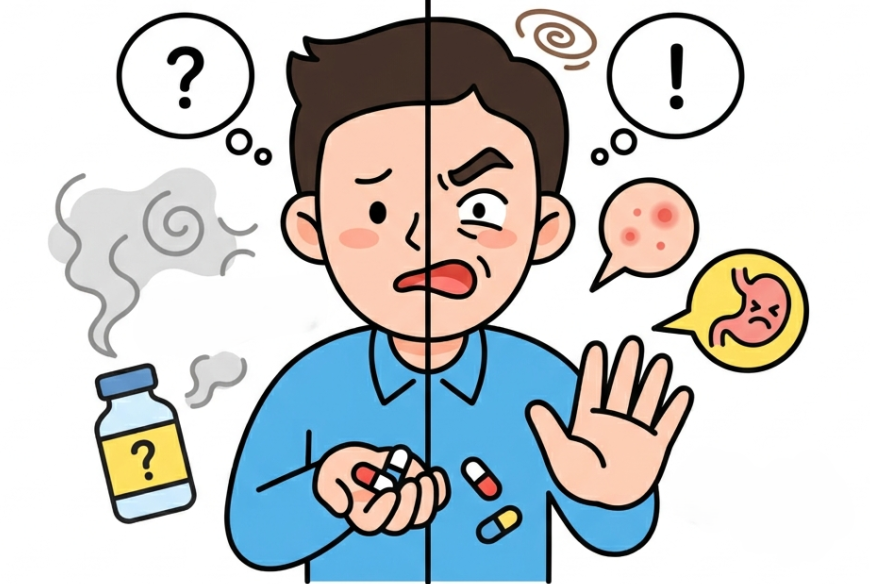
What Does “Myeonghyeon” Mean?
The Korean term myeonghyeonhyeonsang comes from the traditional concept of myeonghyeon and is commonly used to describe a temporary worsening of symptoms that is supposedly followed by improvement.
In modern wellness marketing, the concept has expanded considerably. Headaches, diarrhea, fatigue, skin rashes, dizziness, nausea, and even changes in mental status may sometimes be described as signs that the body is “cleansing itself.”
The important point is that “myeonghyeon” is not a standardized medical diagnosis used to explain these symptoms.
Modern medicine does not assume that a new or worsening symptom is evidence that a treatment is working. Instead, clinicians look for a plausible cause.
For example, if someone develops confusion after starting a new supplement, doctors may consider:
- A reaction to the supplement itself
- An interaction with another medication
- An undisclosed ingredient or contamination
- Dehydration or electrolyte abnormalities
- Low blood sugar
- Infection
- Liver or kidney dysfunction
- A neurological disorder
- An adverse effect of a prescription drug
The symptom may eventually turn out to be harmless, but the cause needs to be established before calling it a healing response.
Why Can the “Healing Crisis” Explanation Be Dangerous?
The biggest problem is not the word itself. The problem occurs when the term is used to discourage someone from seeking medical attention.
Consider two very different statements:
“This symptom might be related to the product. Let's stop and investigate.”
and
“This symptom proves the product is working, so keep taking it.”
The first approach leaves room for diagnosis. The second can delay diagnosis and treatment.
This is particularly concerning when a person develops neurological symptoms.
A mild stomach upset after taking a supplement may not be an emergency. But suddenly seeing things that are not there, becoming disoriented, or being unable to recognize familiar people is a different situation.
The severity and type of symptom matter more than the label attached to it.
Can Supplements Cause Dementia-Like Symptoms or Hallucinations?
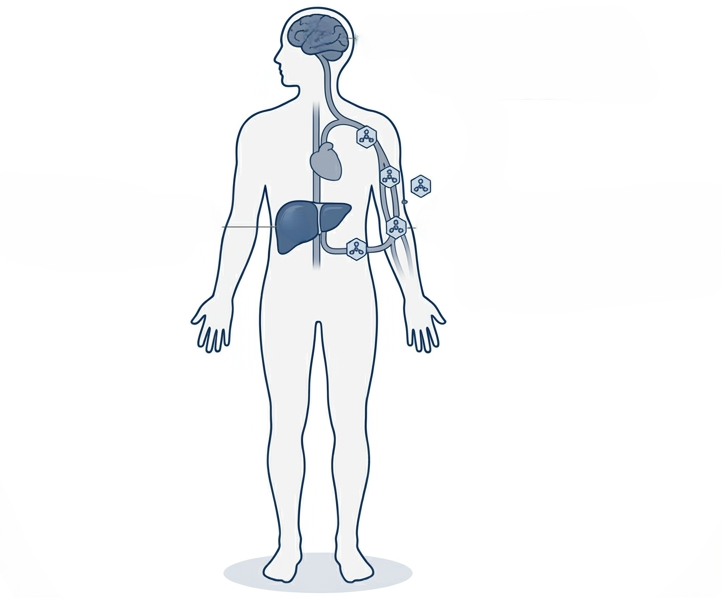
A sudden change in memory or behavior after taking a product does not necessarily mean the person has developed dementia.
In fact, acute confusion and dementia are different clinical problems.
Dementia usually refers to a progressive decline in cognitive abilities that develops over time. By contrast, delirium is a sudden disturbance in attention, awareness, and thinking that can fluctuate during the day.
Delirium may involve:
- Sudden confusion
- Disorientation
- Inability to concentrate
- Unusual agitation
- Excessive sleepiness
- Disorganized speech
- Visual or auditory hallucinations
- Rapid changes in behavior
A person who suddenly becomes confused after taking a new supplement therefore needs an explanation for the acute change rather than an assumption that the supplement is causing a temporary “detox.”
Possible causes include medications, infections, dehydration, electrolyte disturbances, metabolic problems, organ dysfunction, or neurological conditions.
What about “toxins leaving the brain”?
There is no general medical principle that hallucinations, confusion, or memory loss mean toxins are being released from the brain as part of a healing process.
If a product is associated with neurological symptoms, the safer approach is to investigate whether the product, one of its ingredients, an interaction, or an unrelated medical condition is responsible.
Five Symptoms That Are Often Misinterpreted as a “Healing Reaction”
1. Confusion, Memory Problems, and Hallucinations
This is the category that deserves the greatest caution.
Someone may suddenly become forgetful, speak incoherently, fail to recognize family members, or report seeing people or objects that are not actually present.
These symptoms should not be dismissed as a sign that the brain is “detoxifying.”
Depending on the circumstances, clinicians may investigate medications, infections, metabolic abnormalities, liver or kidney dysfunction, toxic exposure, or neurological causes.
Severe or sudden mental-status changes warrant prompt medical assessment.
2. Skin Rash, Hives, and Itching
A rash after taking a supplement is sometimes described as the body “pushing toxins out through the skin.”
That explanation should not be accepted automatically.
A new rash may represent an allergic or immune-mediated reaction, a medication reaction, an infection, or another dermatological condition.
The situation becomes urgent if the rash is accompanied by:
- Swelling of the lips, tongue, or throat
- Difficulty breathing
- Wheezing
- Fainting or severe dizziness
- Rapidly spreading hives
These can be signs of a serious allergic reaction.
3. Extreme Fatigue and Weakness
Feeling tired after starting a new product does not necessarily mean the body is “resting and healing.”
Fatigue has countless possible causes, including dehydration, poor sleep, infection, anemia, medication effects, metabolic abnormalities, and liver or kidney problems.
If fatigue is unusually severe, appears suddenly, or occurs together with confusion, vomiting, jaundice, fever, or shortness of breath, it deserves medical attention.
4. Persistent Diarrhea and Vomiting
Diarrhea is sometimes marketed as evidence that a supplement is “cleansing the intestines” or removing accumulated waste.
Physiologically, diarrhea can result from intestinal irritation, altered intestinal motility, osmotic effects, infection, medication reactions, food intolerance, and many other causes.
Repeated vomiting or diarrhea can cause significant fluid and electrolyte losses.
This is especially important for older adults, people with chronic illnesses, and patients undergoing cancer treatment.
Signs of dehydration can include:
- Very dry mouth
- Marked weakness
- Reduced urination
- Dizziness
- Confusion
- Rapid heartbeat
5. Severe Headache or Dizziness
Headaches and dizziness are also nonspecific symptoms.
Depending on the product, possible explanations may include stimulant effects, changes in blood pressure, dehydration, low blood sugar, medication interactions, or other medical conditions.
A severe or unusual headache accompanied by weakness, difficulty speaking, fainting, confusion, vision changes, or other neurological symptoms should not be attributed to a “healing reaction.”
“Healing Reaction” vs. Possible Adverse Effect
There is no reliable home test that can definitively distinguish a supposed healing reaction from an adverse reaction.
Still, certain patterns should make you more cautious.
| Situation | Safer interpretation |
| Mild, short-lived discomfort | Monitor, but consider the product and other possible causes |
| Symptoms repeatedly occur after taking the product | Possible product-related reaction should be considered |
| Symptoms become progressively worse | Medical assessment is appropriate |
| New hallucinations or severe confusion | Do not assume a healing reaction |
| Breathing difficulty or throat swelling | Emergency situation |
| Severe vomiting or diarrhea | Risk of dehydration and electrolyte problems |
| Jaundice or unusually dark urine | Possible liver or biliary problem |
| High fever during cancer treatment | Contact the treating medical team promptly |
One particularly important misconception is the idea that “the worse the symptoms, the stronger the treatment is working.”
There is no general medical rule supporting that claim.
Why Cancer Patients Need Extra Caution
The distinction becomes even more important during cancer treatment.
People receiving chemotherapy, immunotherapy, targeted therapy, radiation, or combinations of treatments may also be taking medications for nausea, pain, infection, inflammation, sleep, blood pressure, and other problems.
Adding an herbal product or concentrated supplement introduces another variable.
Some herbs and dietary supplements can affect drug metabolism or interact with medications. A supplement that is harmless for one person may therefore be inappropriate for another person receiving a specific cancer treatment.
This is why “natural” does not automatically mean “safe.”
A concentrated herbal extract is pharmacologically different from casually eating a small amount of the same plant as food.
Products that deserve particular caution during cancer treatment
Patients should discuss the following with their oncology team before adding them to a treatment regimen:
- High-dose vitamins or minerals
- Concentrated antioxidant supplements
- Herbal extracts
- Traditional herbal medicines
- Multi-ingredient cancer supplements
- Products claiming to “kill cancer cells”
- Imported products with unclear ingredient lists
- Supplements recommended specifically as alternatives to cancer treatment
The concern is not that every supplement is harmful. Rather, the safety of a supplement depends on its ingredients, dose, quality, the patient's medical condition, and the treatments being used.
Symptoms Cancer Patients Should Never Simply Label as “Myeonghyeon”

| Symptom | Why it matters |
| Sudden confusion or hallucinations | May indicate delirium, medication effects, infection, metabolic problems, or other serious conditions |
| Fever and chills | Infection can become serious in patients whose immune defenses are compromised |
| Yellow skin or eyes | May indicate liver or biliary problems |
| Persistent vomiting or diarrhea | Can cause dehydration and electrolyte abnormalities |
| Severe weakness or unusual drowsiness | May have multiple medical causes |
| Shortness of breath or facial swelling | May indicate a serious allergic reaction |
| New neurological symptoms | May require urgent neurological evaluation |
During cancer treatment, patients should follow the fever threshold and emergency instructions provided by their oncology team. A temperature of 38°C (100.4°F) or higher is commonly used as an important warning threshold in patients receiving chemotherapy, but individual instructions from the treating cancer center should take priority.
What Should You Do If Symptoms Begin After Taking a Supplement?
The safest response is not to experiment with increasingly larger doses to see whether the symptoms disappear.
Instead, collect useful information for the healthcare professional.
1. Keep the product packaging
Keep the bottle, box, ingredient list, and lot or batch information if available.
This can be particularly helpful when the product contains multiple ingredients.
2. Record when the symptoms started
Write down:
- When the product was first taken
- How much was taken
- When the most recent dose was taken
- When symptoms began
- Whether symptoms improved or worsened
- What prescription and over-the-counter medications were being taken
This timeline can help clinicians assess whether a relationship is plausible.
3. Do not add another “detox” product
Trying to treat a suspected reaction with another supplement can make the situation harder to understand.
Adding multiple products at once also makes it difficult to identify which ingredient may be responsible.
4. Ask a doctor or pharmacist about interactions
Bring the actual product or a clear photograph of its ingredient label if possible.
Do not assume that the healthcare professional only needs to know about prescription medicines. Vitamins, herbal products, teas, powders, and imported supplements can also be relevant.
5. Do not stop essential prescription treatment on your own
If a person is taking cancer medication or another essential prescription drug, it should not be stopped simply because a new symptom occurs.
Instead, contact the treating medical team promptly and explain exactly what happened.
When Is It an Emergency?
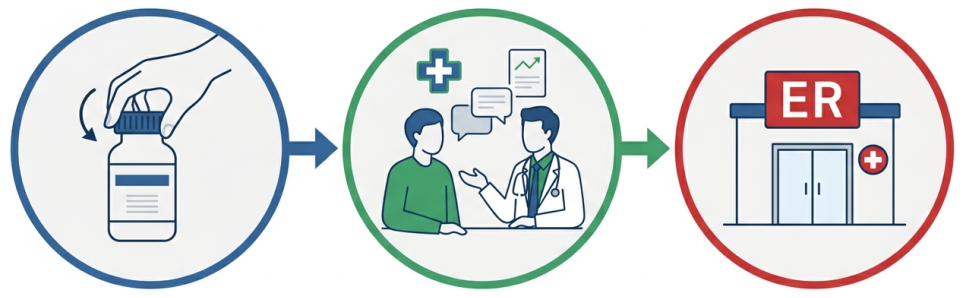
Do not wait to determine whether a symptom is a “healing crisis” when there are signs of a potentially serious medical problem.
Seek urgent medical attention for symptoms such as:
- Difficulty breathing
- Swelling of the tongue or throat
- Fainting or severe weakness
- Sudden loss of consciousness
- New severe confusion
- Hallucinations with altered awareness
- New trouble speaking or moving
- Severe or rapidly worsening headache
- Persistent vomiting with inability to keep fluids down
- Significant dehydration
- Yellowing of the skin or eyes
- High fever during cancer treatment
The exact evaluation depends on the symptoms. A healthcare professional may order blood tests, liver and kidney function tests, electrolyte testing, infection testing, or neurological imaging when clinically indicated.
Not everyone with confusion needs a brain CT or MRI, and not everyone with suspected liver problems needs the same treatment. The appropriate tests depend on the individual presentation.
How to Think About Supplements More Safely
A useful rule is to replace the question:
“Is this a healing reaction?”
with:
“What could be causing this symptom?”
That small change in thinking can prevent a potentially dangerous delay in care.
Before starting a new supplement, consider:
- What exactly are the active ingredients?
- What is the actual dose?
- Are there multiple ingredients with overlapping effects?
- Could it interact with my medications?
- Do I have a condition affecting my liver, kidneys, heart, or nervous system?
- Am I undergoing cancer treatment?
- Is the product making claims that sound medically unrealistic?
- Does the seller tell customers to ignore serious side effects?
A particularly important warning sign is a seller who says that any adverse symptom proves the product is working.
A legitimate healthcare approach should allow for the possibility that a symptom represents an adverse effect, an interaction, or an unrelated illness.
The Bottom Line: Don't Let the Label Delay the Diagnosis
The concept of a “healing crisis” may sound reassuring when someone experiences discomfort after starting a new health product. But the label itself does not explain what is happening inside the body.
A headache may be a minor side effect. A rash may be an allergic reaction. Persistent diarrhea may cause dehydration. Severe fatigue may have many possible causes.
And sudden confusion, hallucinations, or major changes in behavior deserve particular attention because they can be signs of delirium or another acute medical problem, rather than dementia or a supposed detox process.
The same principle is even more important during cancer treatment.
A patient receiving chemotherapy or other cancer therapy should not assume that a new symptom means cancer cells are dying or that the treatment is “working harder.” New supplements, herbal medicines, and concentrated extracts should be discussed with the oncology team because interactions and treatment-specific risks are possible.
Ultimately, the safest principle is simple:
A worsening symptom is not proof that a treatment is working. Find out why the symptom is happening first.
If hallucinations, severe confusion, breathing difficulty, jaundice, significant dehydration, neurological symptoms, or fever during cancer treatment occur, seek appropriate medical care rather than waiting for a supposed healing reaction to pass.
This article is for general educational purposes and is not a substitute for individualized medical advice. If you are receiving cancer treatment or taking prescription medication, discuss new supplements, herbal products, or significant new symptoms with your healthcare professional.


