When a loved one switches from chemotherapy to Keytruda, unfamiliar side effects can appear fast. Here's what caused five of the toughest ones we faced — pneumonitis, arrhythmia, delirium, appetite loss, and colitis — and how we managed them at the bedside and at home.
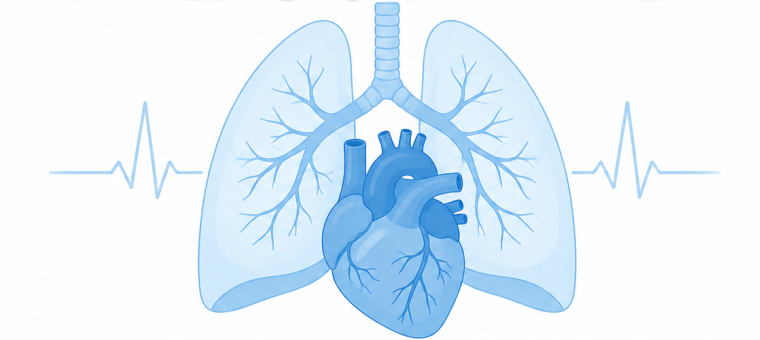
Watching a parent go through cancer treatment is hard enough. Watching them go through a treatment switch — from conventional chemotherapy to an immunotherapy drug like Keytruda (pembrolizumab) — and then develop a cluster of unfamiliar symptoms within days is a different kind of hard. That's what happened with my mother. Within roughly a week of her first Keytruda infusion, she developed pneumonia-like lung symptoms, a racing heartbeat, sudden confusion, loss of appetite, and severe diarrhea — nearly all at once.
This post walks through what her care team told us about each symptom, what we did at her bedside and later at home, and how we adjusted her diet once acute kidney injury entered the picture. None of this is medical advice, and not every symptom we saw can be attributed to Keytruda with certainty — her doctors evaluated infection and other causes alongside the possibility of immune-related side effects. If you're a caregiver going through something similar, I hope this gives you a framework for understanding what's happening and when to act.
Why Immunotherapy Causes a Different Kind of Side Effect
Keytruda belongs to a class of drugs called PD-1 inhibitors, part of a broader group known as immune checkpoint inhibitors. Instead of killing cancer cells directly the way traditional chemotherapy does, it blocks a signal that cancer cells use to hide from the immune system. Once that block is in place, the patient's own T-cells go looking for cancer cells to attack.
The trade-off is that a generally more activated immune system doesn't always stay selective. In some patients, T-cells start attacking healthy tissue too — the lungs, heart, gut, thyroid, skin, and occasionally the kidneys. Doctors call this cluster of reactions immune-related adverse events, usually abbreviated irAE. Because the mechanism is closer to autoimmune disease than to classic drug toxicity, treatment and monitoring look different from what you'd expect with older chemotherapy regimens.
One detail worth knowing as a caregiver: irAEs don't always show up right after the first dose. They can appear weeks into treatment, months in, or even after treatment has ended — so vigilance doesn't stop once a patient tolerates the first few cycles well.
The Five Symptoms We Encountered
1. Immune-Related Pneumonitis
What's happening: Activated T-cells trigger inflammation in lung tissue (the alveoli and interstitium) that they would normally leave alone. It can look a lot like bacterial pneumonia on imaging and in symptoms, but the underlying cause — and often the treatment — is different. Care teams frequently rule out infection first, then consider corticosteroids if an immune mechanism seems likely. In my mother's case, lung symptoms appeared during chemotherapy and recurred during immunotherapy, so her doctors treated for possible infection while also monitoring for an immune-related process.
Watch for: a dry cough, breathlessness that worsens with activity, a drop in oxygen saturation, and chest discomfort.
2. Immune-Related Myocarditis and Rapid Arrhythmia
What's happening: This is essentially an autoimmune inflammation of the heart muscle and its electrical conduction system. It's one of the rarer irAEs, but also one of the more dangerous ones, especially when kidney function or electrolyte levels are already off balance. My mother's heart rate spiked to around 170 beats per minute during one episode, which required immediate, focused intervention from her medical team.
Watch for: heart palpitations, a drop in blood pressure, chest tightness, dizziness, or fainting.
3. ICU Delirium from Metabolic Stress
What's happening: This one is easy to misread as a psychiatric crisis, but it isn't one. Delirium in this setting is usually driven by physical causes — uremic toxin buildup from acute kidney injury, low oxygen levels from pneumonitis, and rapid heart rate changes all place metabolic stress on the brain. The result is a temporary, acute disruption in brain function, not a chronic mental illness. Recovery timelines vary from patient to patient, and some cases need additional treatment beyond simply resolving the underlying cause.
This was, honestly, the hardest part for me as a caregiver. Watching someone you love become anxious and disoriented, unable to reliably recognize where — or sometimes who — they are, is emotionally exhausting in a way that's hard to describe until you've lived through it.
Watch for: severe agitation or aggression, disorientation to time, place, or person, paranoid delusions (in our case, moments of believing people nearby meant harm), and hallucinations.
4. Appetite Loss (Anorexia)
What's happening: Inflammatory cytokines released during treatment stress — things like TNF-α, IL-1, and IL-6 — along with mild inflammation in the digestive tract lining, can suppress the appetite center in the hypothalamus. There were stretches of several days where my mother ate almost nothing.
Watch for: a sharp drop in food intake, rapid weight loss, and — if it goes on long enough — low serum albumin leading to swelling and low blood pressure.
5. Immune-Related Colitis and Diarrhea
What's happening: Activated T-cells attack the lining of the colon, causing ulceration and inflammation — essentially an autoimmune colitis. This one deserves extra attention because it connects to the arrhythmia risk above: ongoing diarrhea depletes potassium and sodium, and that electrolyte loss can make heart rhythm problems significantly worse. The two symptoms aren't isolated from each other — they can feed into one another.
Watch for: watery stools multiple times a day, abdominal cramping, and in severe cases, blood in the stool.
Grading Symptoms and Knowing When to Call the Care Team
Oncology teams often use a grading framework based on CTCAE (Common Terminology Criteria for Adverse Events) to decide how urgently a symptom needs to be addressed. Here's a simplified version that helped us think about severity at the bedside:
| Symptom | Mild — monitor at home | Moderate to severe — contact care team immediately |
| Pneumonitis | Occasional dry cough, slight breathlessness on flat ground | Breathlessness at rest, new or worsening drop in oxygen saturation |
| Arrhythmia | Mild palpitations with exertion, pulse steady at 60–100 bpm | Persistent rapid heart rate at rest, chest pain, dizziness, or fainting |
| Delirium | Mild sleep disturbance, slight difficulty concentrating | Severe delusions, attempts to pull out IV lines or other unsafe behavior |
| Appetite loss | 20–30% reduction in usual food intake, hydration still adequate | Unable to eat orally at all, 5%+ weight loss within two weeks |
| Colitis/diarrhea | 2–3 more loose stools per day than baseline | 4–6+ episodes per day, persistent abdominal pain, nighttime diarrhea |
Go to the emergency room immediately for: a sudden drop in oxygen saturation, sudden chest pain, loss of consciousness, severe diarrhea lasting more than 4 episodes a day, blood in the stool, or a fever above 38°C (100.4°F).
What We Did at the Bedside
For breathing and heart rhythm issues
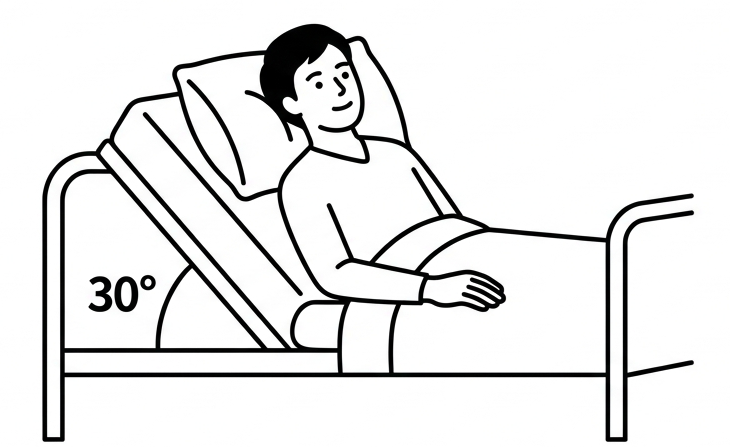
- Positioning matters. Raising the head of the bed 15–30 degrees (a semi-Fowler's position) lowers the diaphragm and gives the lungs more room to expand, which noticeably eases breathing effort.
- Chest physiotherapy, with caution. We only did manual chest percussion after being trained by nursing staff, and never if there was any risk of coughing up blood or rib fracture. Done correctly, it helps loosen mucus and reduce airway resistance.
- Track the numbers, not just the feeling. Keeping a simple log of oxygen saturation (SpO2) and pulse rate made a real difference in how quickly the care team could respond — vague descriptions like "she seems worse" are much less actionable than actual readings.

For delirium
Arguing with someone in a delirious state, or trying to logically convince them their fears aren't real, tends to backfire — it can activate their sympathetic nervous system further and intensify the agitation.
- Separate the behavior from the person. It helped me to remind myself, in the moment, that what I was seeing was a neurological symptom, not a reflection of who she was.
- Offer calm, repeated orientation. Speaking slowly and quietly, we'd repeat simple facts: where she was, that treatment was progressing, that her lab values were improving, and that I was right there with her.
- Loop in the care team early if there's any risk of falls or self-injury — medication may be appropriate, but that's a clinical decision, not something to manage alone.
Nutrition When Kidney Function and Heart Rhythm Are Both Compromised
If acute kidney injury develops alongside these other symptoms, food choices that would normally be harmless can become genuinely dangerous. Reduced kidney function means the body can't clear excess potassium or phosphorus efficiently, and both can spike to levels that trigger — or worsen — arrhythmia. This matters most when appetite is already low and every bite counts.
The table below reflects what her renal team and dietitian steered us toward and away from — always confirm specifics against your own patient's bloodwork, since tolerances vary.
| Category | Generally safer choices | Foods to limit or avoid |
| Carbohydrates | Plain white rice cakes, plain steamed rice cake (no nuts/toppings), white rice porridge, soft white bread | Whole grain or multigrain bread, red bean or pea-based rice cakes (higher potassium/phosphorus) |
| Protein | Boiled egg whites, unsalted, limited to 1–2 per day | Egg yolks, concentrated protein powders, rich meat broths |
| Fluids/fruit | Lukewarm water, barley tea in small sips, peeled apple | Pear or fruit concentrates, tomatoes, bananas, kiwi (high potassium — restrict if labs show elevated potassium) |
| Commercial nutrition products | Renal-specific nutritional formulas | Regular milk, soy milk, chocolate-fortified energy bars, processed puddings |
One detail that surprised me: egg whites and egg yolks are nutritionally very different in this context. Egg whites are low in both potassium and phosphorus while still providing high-quality protein, which is why they're often favored for patients with reduced kidney function. Egg yolks, by contrast, are rich in phospholipids — a concentrated source of phosphorus that can contribute to vascular calcification and added strain on an already compromised cardiovascular system.
If Treatment Has to Change: Genomic Testing and Alternative Options
When side effects become severe enough that immunotherapy can't continue, the next step often depends on the tumor's genetic profile, established through next-generation sequencing (NGS).
- If a targetable mutation is found (such as EGFR, ALK, ROS1, KRAS, or BRAF), a targeted therapy may become an option. These drugs work by blocking specific cancer cell signaling pathways rather than activating the immune system broadly, so the side effect profile tends to look different from immunotherapy.
- If no targetable mutation is found, conventional cytotoxic chemotherapy — often metabolized by the liver rather than cleared by the kidneys — may be reconsidered. This comes with its own familiar side effects, like hair loss and nausea, though nausea is generally manageable with anti-emetic medication.
Which path makes sense depends heavily on cancer type, stage, and organ function, so this is very much a conversation to have directly with the oncology team once genomic results are back.

Recovery Takes Longer Than It Looks
One thing that caught us off guard: once high-dose steroids brought her pneumonitis symptoms under control within days to a couple of weeks, we assumed she was essentially through it. In reality, confirming full resolution on CT or X-ray — meaning the inflammatory changes in lung tissue have genuinely cleared — can take anywhere from four to twelve weeks or longer, during which steroids are tapered gradually rather than stopped abruptly.
Tapering too quickly is a common way for pneumonitis to flare back up, so sticking to the schedule the care team lays out — even when it feels frustratingly slow — matters more than it might seem in the moment.
Frequently Asked Questions
When do immunotherapy side effects typically appear? Often within the first few weeks to months of treatment, but they can also show up later or even after treatment has ended. That's why ongoing monitoring matters throughout the full course of treatment, not just the first few cycles.
Is delirium a sign of a psychiatric problem? No. In this context, it's typically driven by physical causes — toxin buildup from kidney injury, low oxygen, or rapid heart rate changes — that temporarily affect brain function. Most patients recover as the underlying physical cause improves, though recovery speed varies and some cases need further treatment.
Why does diarrhea affect heart rhythm? Persistent diarrhea causes significant loss of potassium and sodium. Since the heart's electrical system depends on stable electrolyte levels, that loss can worsen or trigger arrhythmia — so the two symptoms are often connected rather than coincidental.
This post is based on one family's personal caregiving experience alongside publicly available clinical information. Side effect patterns from immunotherapy vary widely depending on cancer type, stage, comorbidities, and kidney or liver function. If you notice new or worsening symptoms during treatment, please contact the patient's care team directly rather than relying on this post for guidance.


