Most people trying to lose weight assume the fix is simple: switch to the "lighter" drink. Vodka soda instead of beer. Wine instead of a cocktail. Soju instead of makgeolli.
The problem is that drink choice is only one piece of a much bigger equation. Alcohol calories, portion size, what you eat alongside a drink, and how your body processes alcohol all interact — and any one of them can undo the benefit of picking a "lower-calorie" drink. Here's what actually determines whether a night of drinking shows up on the scale.
Why Alcohol Calories Add Up Faster Than You'd Think
Pure alcohol delivers about 7 calories per gram. That puts it between carbohydrate and protein (4 calories per gram each) and fat (9 calories per gram) — closer to fat than most people expect.
The bigger issue isn't the number itself. It's that alcohol doesn't trigger the same fullness signals as food. Eating a meal tells your body you've had enough; drinking rarely does the same, so those calories tend to land on top of your normal intake rather than replacing it.
A 2025 evidence review from the U.S. National Academies of Sciences, Engineering, and Medicine (NASEM), commissioned to help shape the 2025-2030 Dietary Guidelines for Americans, examined this exact question as part of a broader look at alcohol and health. The committee's findings on weight were more nuanced than "alcohol makes you fat": among men, higher versus lower levels of moderate drinking showed a similar risk of overweight and obesity, while the evidence in women was inconsistent. Separately, published research on alcohol and obesity has found that light-to-moderate drinking generally isn't tied to weight gain, but heavier and more frequent drinking consistently is. In other words, the dose matters more than the drink.
Beer, Wine, Spirits, and Beyond: A Calorie Breakdown
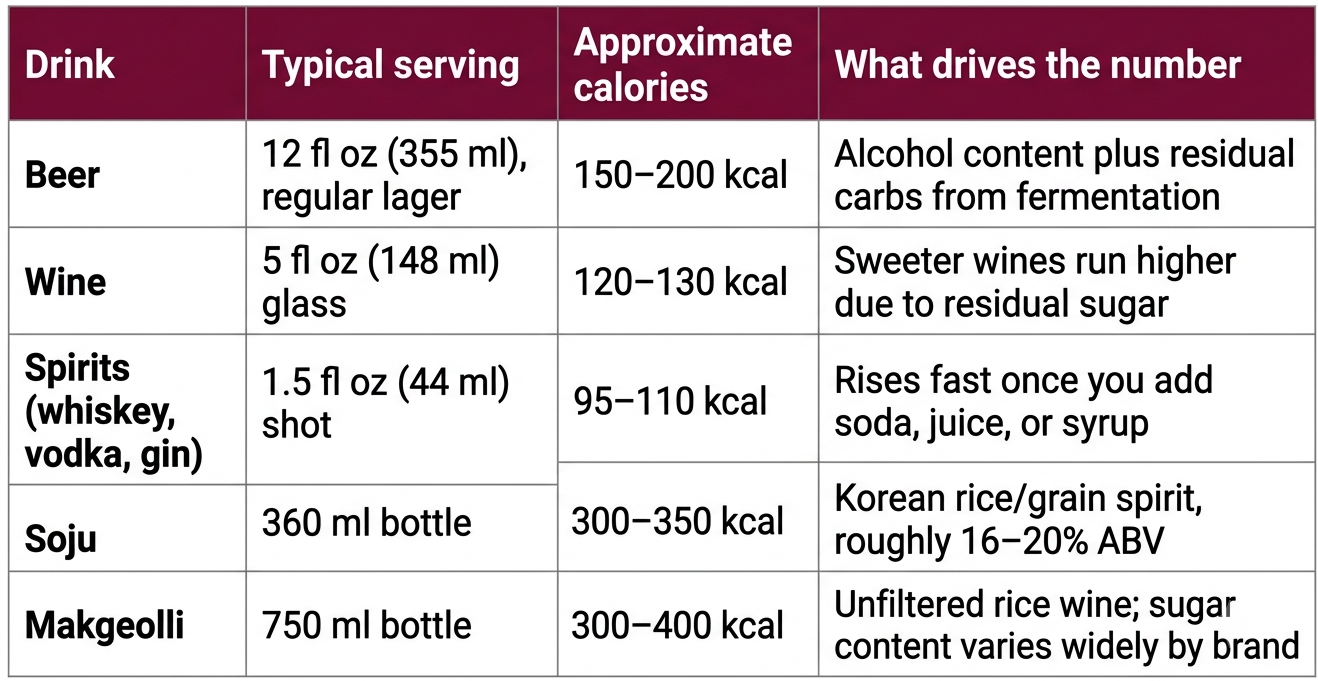
Use these as reference points rather than exact figures — actual calories shift with ABV, brand, and any mixers you add.
Beer rarely stops at one
A single 12 oz beer sits in a reasonable calorie range. The catch is that beer is a session drink — two or three in an evening is normal, not excessive, which means the calorie count from beer alone can hit 400-600 before food enters the picture.
Wine's "healthy" reputation cuts both ways
Wine has a health halo that beer and spirits don't get, but that reputation is about polyphenols and antioxidants, not calories. A dry red and a sweet dessert wine can differ by 30–40 calories per glass, and pouring at home tends to mean larger servings than the standard 5 oz used in nutrition labels.
Spirits are low-calorie only until you add a mixer
Straight spirits are the lowest-calorie option per serving on this list, which is why they get recommended for weight-conscious drinkers. But that advantage disappears fast: a cola or tonic mixer alone can add 80–150 calories per drink, and cocktails built on flavored syrups often exceed the calorie count of a full meal.
Soju and makgeolli deserve a second look
Soju and makgeolli are staples of Korean drinking culture and increasingly popular internationally, but their calorie counts are easy to underestimate because the serving sizes are large. A single bottle of soju (360 ml) or makgeolli (750 ml) is meant to be shared or sipped over an evening, not treated as one "drink" — finishing a bottle solo means comparing it against several standard drinks, not one.
What Happens in Your Body When You Drink
There's a metabolic detail that explains why a night of drinking can affect weight beyond simple calorie math.
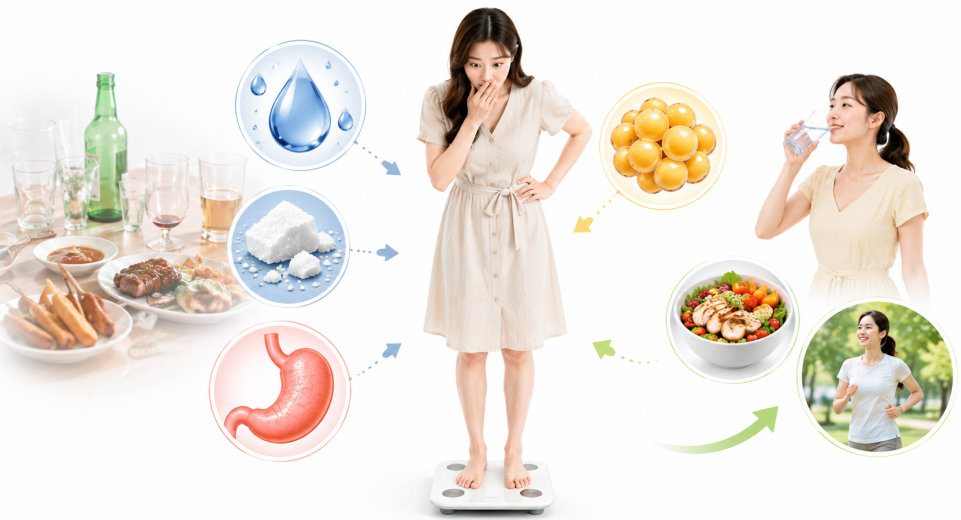
The body can't store alcohol the way it stores fat or glycogen, so it treats alcohol as a metabolic priority and burns it first. While that's happening, fat oxidation — your body's normal process of burning stored and dietary fat for energy — gets pushed down the queue. Fat and carbohydrate calories consumed alongside alcohol are more likely to be stored rather than used immediately, which is part of why a heavy meal paired with drinking tends to be more consequential than the same meal eaten sober.
Next-day weight gain isn't all fat, either. Salty bar food increases water retention, and undigested food still sitting in your gut adds weight on the scale that has nothing to do with fat gain. If you've ever stepped on the scale the morning after a big night and seen a 2–3 pound jump, that's very unlikely to be pure fat — it's mostly water and digestive contents that will resolve within a day or two.
Managing Calories Without Cutting Out Drinks Completely
For most people, "never drink again" isn't a realistic plan. These adjustments tend to hold up better over time:
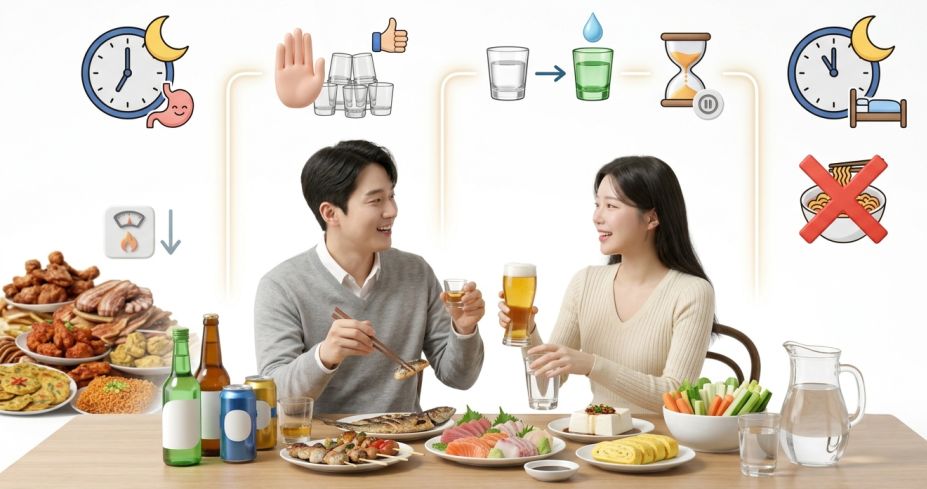
- Skip the pre-drinking fast. Showing up to drinks on an empty stomach doesn't save calories — it usually leads to faster intoxication and worse food choices later.
- Choose grilled, roasted, or raw food over fried. Grilled meat, sashimi, and vegetable-based sides do far less damage than fried chicken or tempura.
- Alternate alcohol with water. This slows your pace, which slows total intake more effectively than switching drink types.
- Set a stopping point for the night, not just for each drink. Late-night food after drinking is often where the real calorie damage happens, not the alcohol itself.
- Don't try to "fix" a heavy night by skipping meals the next day. Eating normally and staying hydrated does more to prevent the rebound overeating that comes from an all-day fast.
The Bottom Line
Comparing soju to beer, or wine to whiskey, misses the actual variable that determines weight impact: total volume consumed, what's mixed into it, and what's eaten alongside it. A single glass of wine sipped slowly with a light meal and three beers paired with fried chicken aren't remotely comparable, even though both technically fall under "having a drink."
If cutting back on alcohol isn't on the table right now, the more sustainable lever is moderating how much you drink and what you eat with it — consistently, not perfectly.


