You pour a glass of wine after a long day, and within twenty minutes your eyelids feel like they're made of lead. It seems like proof that alcohol is a natural sleep aid. It isn't — and understanding why can save you from a habit that quietly wrecks your sleep instead of fixing it.
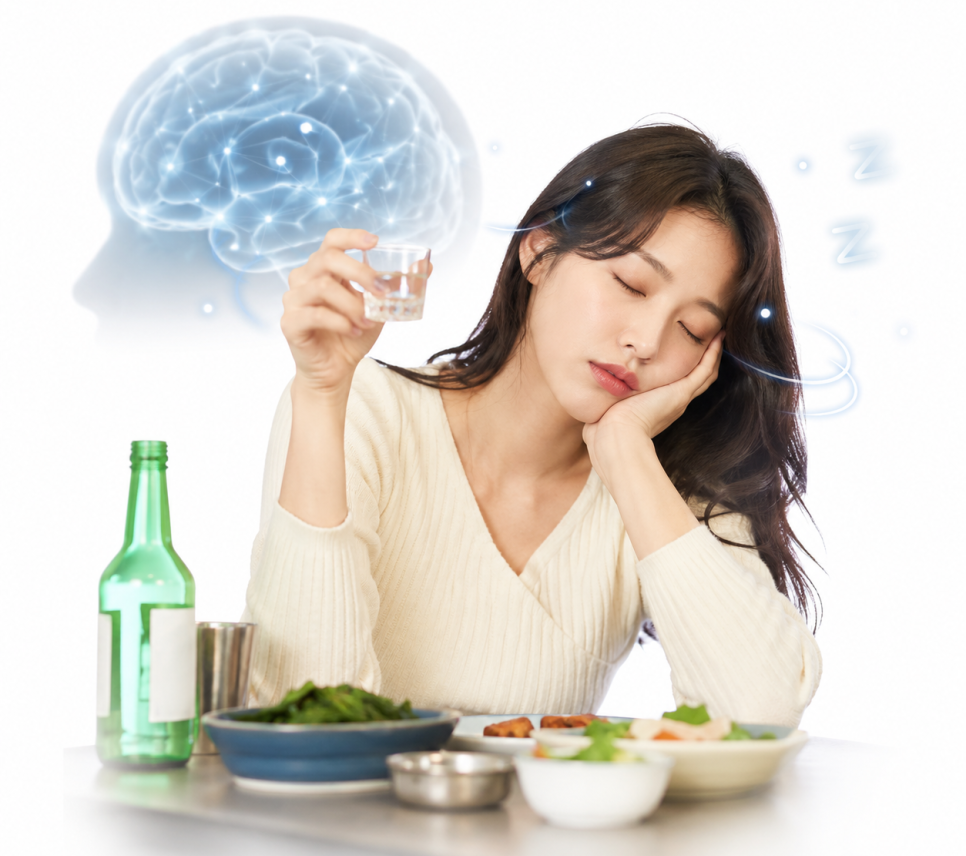
he Quick Answer: It's a Brain Chemistry Trade-Off
Alcohol doesn't relax your body into sleep the way a warm bath or a tired muscle does. It acts directly on your central nervous system, and it does two things to your brain chemistry at once.
First, it boosts the activity of GABA, the brain's main inhibitory neurotransmitter — the chemical messenger that dials down neural firing and produces calm, drowsy feelings. Second, it suppresses glutamate, particularly at NMDA receptors, which is the neurotransmitter responsible for keeping your brain alert and excitable.
Turn up the brake, turn down the gas pedal, and the result is a rapid drop in overall brain arousal. That's the sleepiness you feel — not your body settling naturally into rest, but your central nervous system being chemically slowed down.
Why the Same Amount of Alcohol Hits Differently on Different Nights
If you've ever noticed that two drinks barely register on one night but knock you out on another, that's not random. A handful of factors change how strongly alcohol's sedative effect lands:

In other words, the sleepiness you feel after drinking is really the alcohol effect layered on top of whatever state your nervous system was already in.
Falling Asleep Fast Isn't the Same as Sleeping Well
Here's the part most people get wrong: alcohol shortening the time it takes you to fall asleep says nothing about the quality of the sleep that follows.
A 2026 narrative review published in the journal Nutrients by researcher Jean-Philippe Chaput synthesized recent research on how alcohol affects sleep architecture, and it describes the effect as biphasic — meaning alcohol's impact on your sleep actually flips partway through the night.
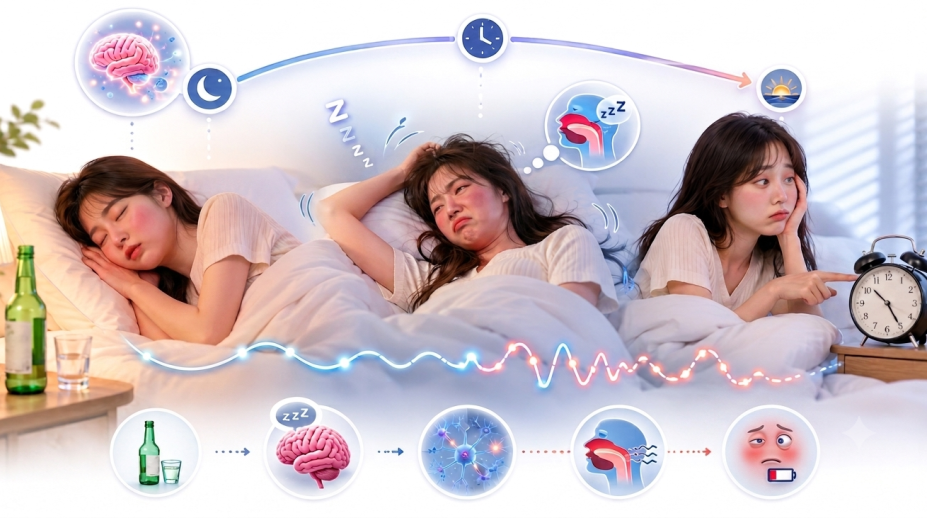
Early in the night, while blood alcohol is still elevated, GABA-driven sedation dominates. You fall asleep quickly, and you tend to get more slow-wave sleep (deep sleep) than usual, while REM sleep — the dream stage tied to memory and emotional processing — is suppressed.
Later in the night, as your liver metabolizes the alcohol and blood alcohol concentration drops, the picture reverses. The review describes a "glutamatergic rebound": the excitatory system that was suppressed earlier swings back, triggering REM rebound, more frequent awakenings, and fragmented, shallow sleep. Breathing-related issues, including snoring and sleep apnea symptoms, also tend to worsen during this second half of the night.
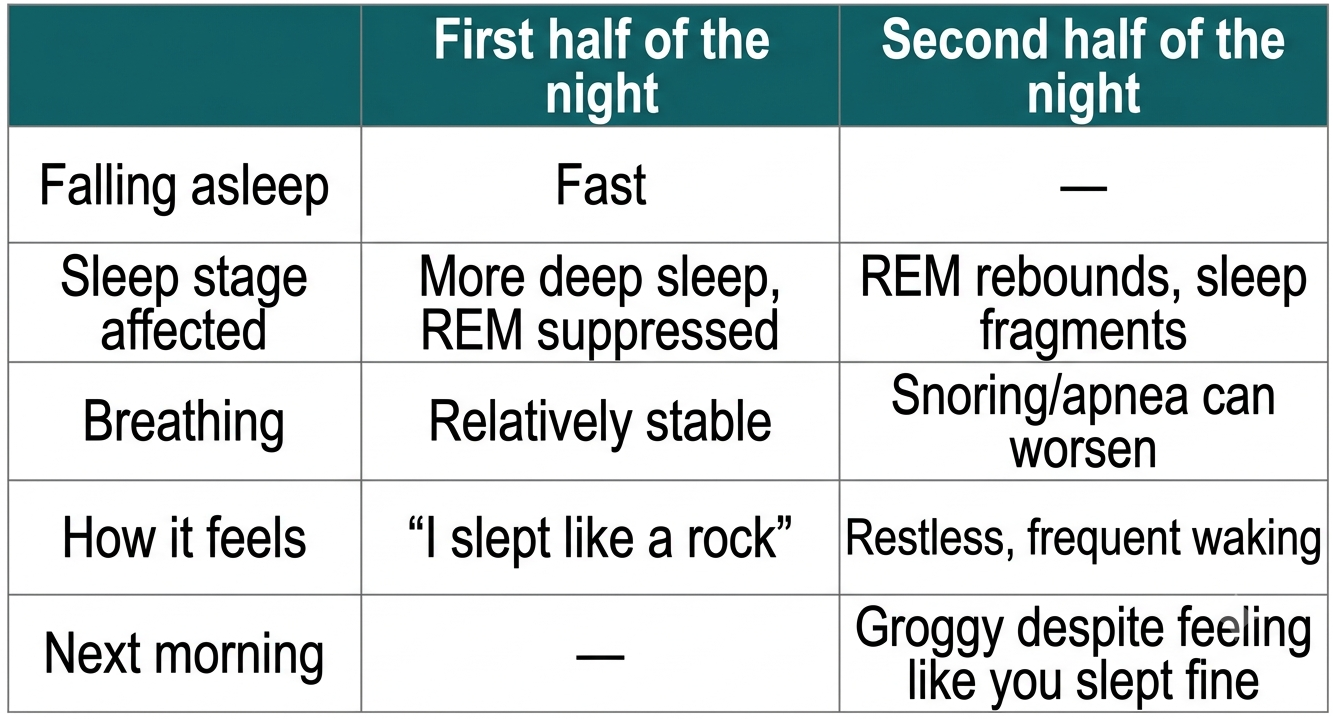
That's the mechanism behind a very common complaint: "I fell asleep instantly after drinking, but I woke up at 3 a.m. and couldn't get back to sleep" — or "I slept eight hours but still feel wrecked." The sedation you notice at bedtime and the disruption happening a few hours later are two separate processes, and the second one is doing more damage to your actual sleep quality.
Is It Safe to Use Alcohol as a Sleep Aid?
Using a nightcap occasionally to fall asleep faster on one rough night is a different situation from relying on alcohol as a routine. The research is consistent on one point: alcohol reduces sleep onset latency, but it does not improve — and generally worsens — overall sleep quality, especially with repeated use.
There's also a practical trap here. Once "I need a drink to fall asleep" becomes a nightly pattern, it can shift from a habit into a dependency, where your body starts to need the alcohol just to reach the sedation threshold it used to hit with less. If poor sleep is a recurring problem, it's worth looking at caffeine timing, screen exposure before bed, stress levels, and a consistent sleep schedule before reaching for alcohol as the fix.
When Sleepiness After Drinking Is a Warning Sign
Ordinary post-drink drowsiness is expected. But there's a line between "I feel sleepy" and something more dangerous. If someone becomes very difficult to wake, breathes abnormally, vomits repeatedly, or shows severely impaired consciousness after drinking, that's not just sleepiness — it points to possible alcohol poisoning, and it needs immediate emergency attention.
It's also worth stating plainly: feeling drowsy after drinking is not a state to drive, cycle, or operate anything in. That drowsiness reflects reduced judgment and slower reaction time, not just tiredness.
The Bottom Line
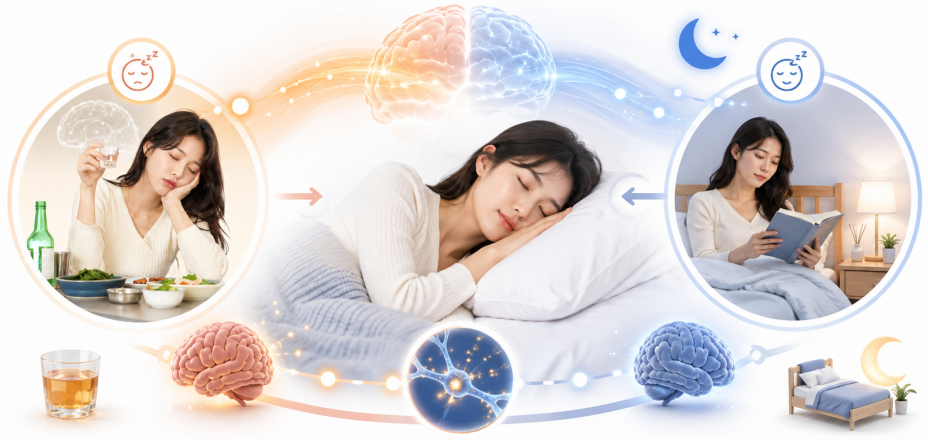
Alcohol makes you sleepy by boosting GABA activity and suppressing glutamate, which lowers your brain's overall arousal level — not because it's giving your body the rest it needs. It can shorten the time it takes to fall asleep, but as blood alcohol drops through the night, that same chemical shift reverses course and fragments your sleep, suppresses restorative REM, and can worsen breathing. Falling asleep fast and sleeping well are two different things, and confusing them is exactly why so many people wake up from a "good night's sleep" after drinking still feeling tired.
This article is for general informational purposes only and is not a substitute for professional medical advice. If you have ongoing sleep problems or concerns about your drinking, please consult a healthcare provider.


