You've probably heard the bar myth: sip your cocktail through a straw and you'll feel the alcohol hit harder. It's one of those claims that gets repeated so often it starts to sound like established fact. But does the straw itself actually speed up how alcohol moves into your bloodstream?
The short answer is no — not directly. What the straw does change is something less obvious, and honestly more useful to understand if you want to pace yourself at your next happy hour.
How Alcohol Actually Enters Your Bloodstream
Alcohol isn't absorbed in your mouth or throat. It passes through the lining of your stomach and small intestine, and that's where it enters your blood. So the route your drink takes on the way down — straw or no straw — has essentially nothing to do with absorption itself.
What matters is how much alcohol reaches your stomach and small intestine, and how quickly it gets there. That distinction is the whole story here.
The Real Effect of a Straw: It Speeds Up Drinking, Not Absorption
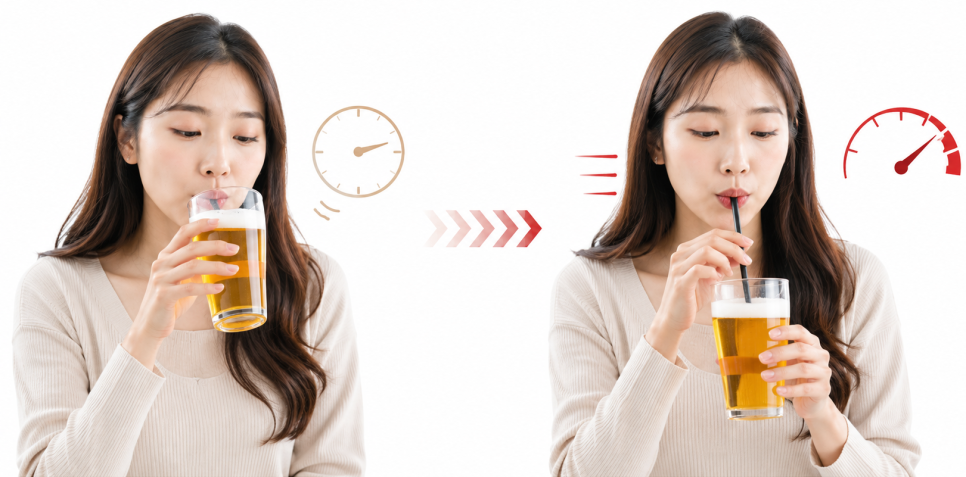
Sipping from a glass naturally paces you. You tilt, you swallow, you set the glass down. A straw removes that built-in pause. Liquid flows continuously as long as you keep sucking, and it's easy to drink through a drink without noticing how fast you're going.
There's a basic fluid dynamics reason behind this, too: a wider or shorter straw lets liquid flow faster than a narrow, long one. So the physical design of the straw can genuinely change how much you consume per minute — just not by altering how your gut processes what you've swallowed.
In other words, a straw doesn't change what alcohol does inside your body. It changes your drinking speed, and drinking speed is what actually drives how fast your blood alcohol concentration (BAC) climbs.
A Personal Observation Worth Unpacking
I don't have much experience drinking soju or spirits through a straw, but I've used one plenty of times with beer or cocktails that came with one already in the glass. And I noticed something: I did feel tipsy faster than when I drank from a glass.
Looking back, that feeling probably wasn't about the straw alone. Cocktails tend to mask the taste of alcohol with sugar and fruit flavoring, which makes it easy to drink more without realizing it. Beer and many cocktails are also carbonated, and carbonation has its own documented effect on absorption — more on that below. The straw likely just added one more layer on top of factors that were already working against me.
Does Carbonation Actually Speed Up Absorption?
This part isn't just folk wisdom — it's been tested. A controlled study comparing vodka mixed with still water versus vodka mixed with carbonated water found that the carbonated version was absorbed significantly faster, likely because carbonation speeds up how quickly liquid leaves the stomach.
Interestingly, the same research found that diluted alcohol was often absorbed faster than the same drink at full strength. So the old assumption that "stronger drinks hit you faster" doesn't hold up cleanly when you isolate absorption rate — concentration, carbonation, and drinking speed all interact in ways that aren't always intuitive.
Why Drinking on an Empty Stomach Hits Harder
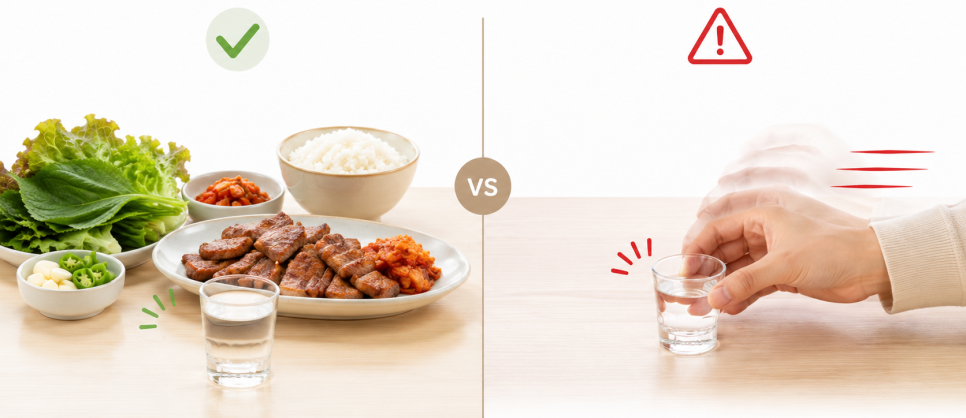
If you're looking for the single biggest factor in how fast alcohol affects you, it's not the straw — it's whether there's food in your stomach. With nothing to slow gastric emptying, alcohol reaches the small intestine faster, and that's where the bulk of absorption happens.
Multiple studies on fasting versus fed drinking show a consistent pattern: BAC rises faster and peaks higher when alcohol is consumed on an empty stomach. If a night out felt unusually rough, skipping dinner beforehand is a far more likely explanation than the straw in your glass.
Why Shots Hit You Fast Too
Shooting a drink packs a large dose of alcohol into your system in seconds. Absorption still takes time, so you won't feel it instantly — but each additional shot adds to what's already being processed. Take several in quick succession and the cumulative absorption catches up all at once, which is why the effects of shots often seem to arrive in a sudden wave rather than gradually.
It's not that the alcohol becomes stronger. It's that your body is handling a much larger amount in a much shorter window, and BAC climbs accordingly.
What Actually Affects How Fast You Feel Drunk

A Practical Way to Check Yourself Mid-Drink
Rather than worrying about whether there's a straw in your glass, a few quick questions tell you more about your actual risk of getting drunk faster than you expected:
- Is this drink emptying noticeably faster than your usual pace?
- Did you start drinking on an empty stomach?
- Is the drink carbonated or sweet enough that you can't really taste the alcohol?
- Are you refilling your glass as soon as it's empty?
If two or more of these apply, you're likely absorbing alcohol faster regardless of whether a straw is involved. Slowing down deliberately, or alternating with water, does more to manage how you feel than avoiding straws ever will.
The Bottom Line
If drinking through a straw has ever left you feeling drunk faster than expected, that feeling is real — it's just not the straw doing the work directly. It's more likely a combination of faster sipping, an empty stomach, carbonation, or simply drinking more than usual in less time.
Paying attention to your pace, rather than the tools you're drinking with, is the more reliable way to stay in control on a night out.
This article is for general informational purposes only and is not a substitute for medical advice. Individual responses to alcohol vary based on body composition, health conditions, and other factors. Never drink and drive, and consult a healthcare provider if you experience unusual symptoms after drinking.


