You've probably felt it before: you stand up after a long stretch at your desk or behind the wheel, and the first few steps send a sharp twinge through your heel or the bottom of your foot. Then, just as quickly as it appeared, the pain fades after a handful of steps.
It's a strange, almost forgettable kind of pain — easy to shrug off in the moment, but worth understanding if it keeps happening.

What's Actually Happening in Your Foot While You Sit
Sitting still for long periods doesn't just rest your legs — it also puts your feet into a kind of standby mode. Blood flow slows, the calf muscles stop actively working, and the connective tissue on the sole of your foot has no reason to stretch or move.
Think of it the way a rubber band behaves after sitting untouched for a while: it stiffens slightly, and it needs a moment to loosen back up before it can stretch the way it normally would.
When you suddenly stand and shift your full body weight onto that stiffened tissue, the load lands all at once instead of gradually. That's often what produces the sharp, brief pain in the heel or arch right after you get up — and why it eases once you've taken a few steps and the tissue warms back up.
When This Pattern Points to Plantar Fasciitis
The plantar fascia is a thick band of connective tissue that runs from your heel to the base of your toes, supporting the arch of your foot with every step you take. When this tissue is repeatedly overloaded, it can become irritated — a condition known as plantar fasciitis.
According to the Mayo Clinic, plantar fasciitis typically causes a sharp, stabbing pain in the bottom of the foot near the heel. That pain is usually worst with the first few steps after waking up, tends to ease as you move around, and can return after standing for long periods or getting up from sitting.
That overlap is worth paying attention to. If the discomfort you feel after standing up from your desk chair follows a similar pattern to classic "first-step" morning pain, it may be an early sign of plantar fasciitis rather than ordinary stiffness.
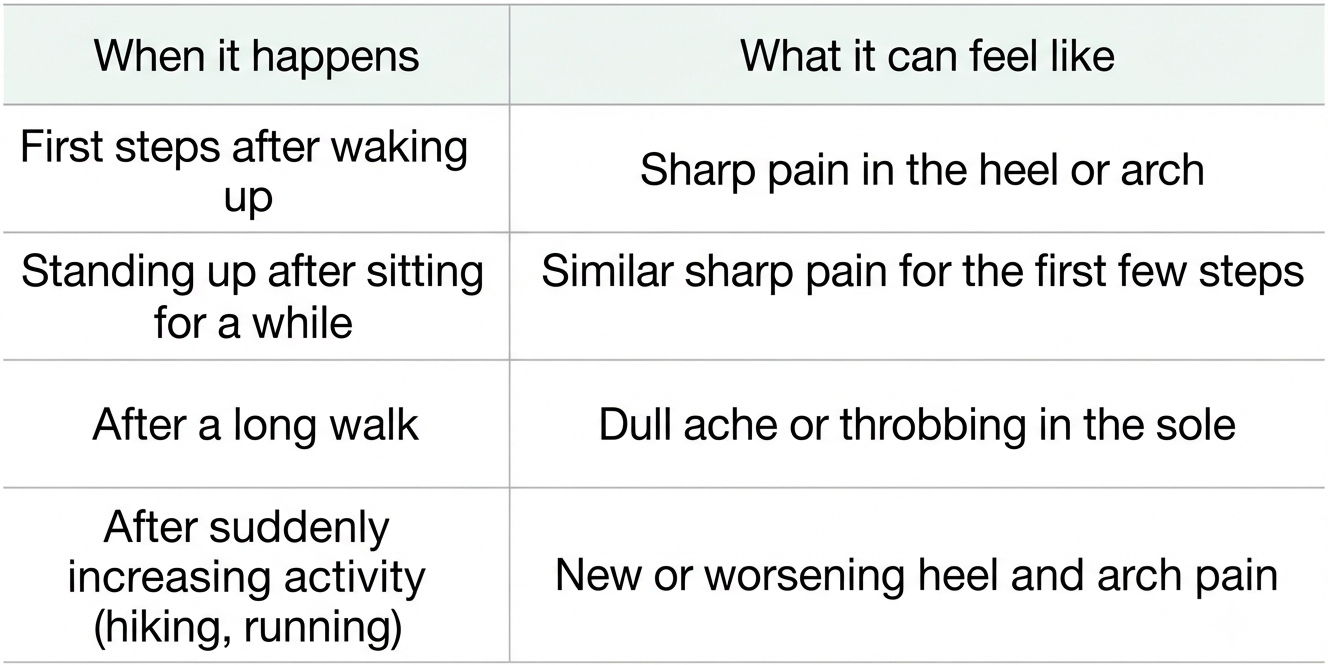
That said, first-step pain alone doesn't automatically mean plantar fasciitis. Tight ankles, worn-out shoes, foot structure, and recent changes in activity level can all contribute to the same symptom.
Don't Write It Off as "Just Tired Feet"
It's easy to chalk this up to a long day and move on — and if it happens once in a while, that's probably fine. But if the same pain shows up every time you stand up after sitting, it's worth treating it as a pattern rather than a coincidence.
Ask yourself: has your activity level actually changed recently? A sudden jump in walking, hiking, or standing time can increase the load on your feet more than you'd expect. On the other hand, if the pain only shows up after one specific activity and disappears quickly, your footwear and recent activity level are a good place to start looking for the cause.
A Few Things to Try Before Your First Step
Instead of standing up and walking off immediately after sitting for a while, try loosening things up first. Rotate your ankles, wiggle your toes, and give your calves a light stretch while you're still seated.
If you're on a long drive, use rest stops as an opportunity to actually get out and walk for a few minutes rather than just stretching your legs inside the car.
That said, pain isn't a signal to stretch or massage aggressively. The better approach is to pay attention to what your body is telling you and avoid movements that make the pain worse. Wearing shoes with proper cushioning and arch support for your foot type, and avoiding sudden jumps in activity level, both go a long way toward reducing the load on the plantar fascia.

When It's Time to See a Doctor
Occasional discomfort after sitting is common and usually not a cause for concern on its own. But recurring or worsening foot pain is worth having checked out, particularly if you notice any of the following:
- Pain severe enough to affect how you walk
- Swelling or warmth around the heel or arch
- Pain that persists after an injury
- No improvement even with adequate rest
There's no single explanation for why your feet hurt after standing up from sitting. Sometimes it's simply stiffened tissue suddenly taking on your body weight. Other times, especially when the pain repeats the same first-step pattern, it can be an early clue pointing toward plantar fasciitis.
If it's occasional, a few small adjustments to how you stand up and what you wear may be enough. If it keeps coming back, it's worth listening to what your feet are telling you rather than dismissing it as ordinary fatigue.
This article is for general informational purposes only and is not a substitute for professional medical advice. Foot pain can have many different causes, and the right approach varies from person to person. If your symptoms persist or interfere with walking, consult a podiatrist or physician rather than relying on self-diagnosis.


