Waking up with a dry, sticky feeling in your mouth is one of those things almost everyone experiences at some point, yet it rarely gets talked about. If you find yourself reaching for water the moment you open your eyes, you're not imagining a problem — there's a straightforward biological reason behind it, and knowing when it's normal versus when it's worth a second look can save you a lot of unnecessary worry.
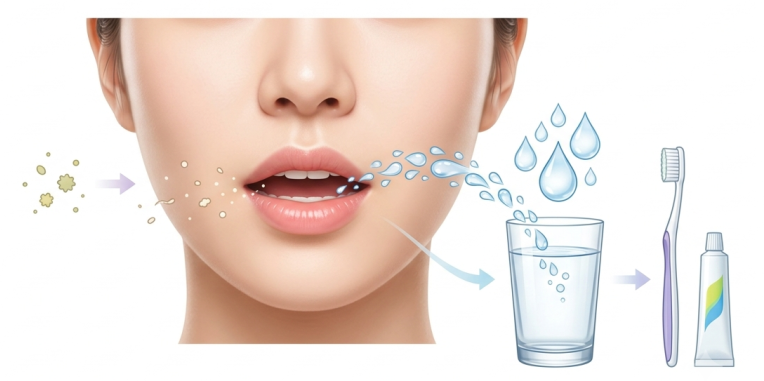
Your Saliva Production Naturally Slows Down at Night
Saliva does more than just keep your mouth moist. It washes away food particles, neutralizes acids, and helps control the bacteria that live in your mouth throughout the day.
During sleep, your body shifts into a lower-activity state, and salivary glands are no exception — production drops significantly compared to when you're awake. The longer you sleep, the more pronounced that overnight dip becomes, which is exactly why the dryness tends to peak right when you wake up rather than building gradually through the day.
That drop in volume also changes the texture of the saliva that's left. It's not that your mouth runs completely dry overnight — it's that less saliva, combined with a longer stretch without swallowing, makes what remains feel thicker and stickier than usual.
Mouth Breathing Could Be Making It Worse
Ever notice how some mornings are worse than others, even when you slept the same number of hours? Breathing pattern is often the missing piece.
If you have a stuffy nose, snore regularly, or tend to sleep with your mouth slightly open, you're likely breathing through your mouth for at least part of the night. Air moving in and out through the mouth dries out the oral tissue directly, since it skips the humidifying effect your nasal passages normally provide. Seasonal allergies or a cold that leaves your nose blocked can make this noticeably worse for a few weeks at a time.
A simple way to check: if dryness is worse after nights when your nose was congested, or after sleeping on your back with your mouth open, breathing pattern — not hydration — is probably the bigger factor. Running a humidifier in the bedroom can also help if the air in your home tends to be dry, since dry indoor air dries out nasal passages too and pushes you toward mouth breathing.
What About Morning Breath?
Reduced saliva means reduced rinsing action, which lets bacteria and food debris linger longer than they would during the day. That's the main reason morning breath tends to be stronger than breath at other times.
A useful rule of thumb: if brushing and a glass of water clear it up quickly, this is a normal overnight pattern rather than a sign of anything else going on. If bad breath persists well into the day regardless of oral hygiene, it's worth looking at alongside other symptoms below rather than treating it as its own separate issue.
Occasional Dryness vs. Chronic Dry Mouth
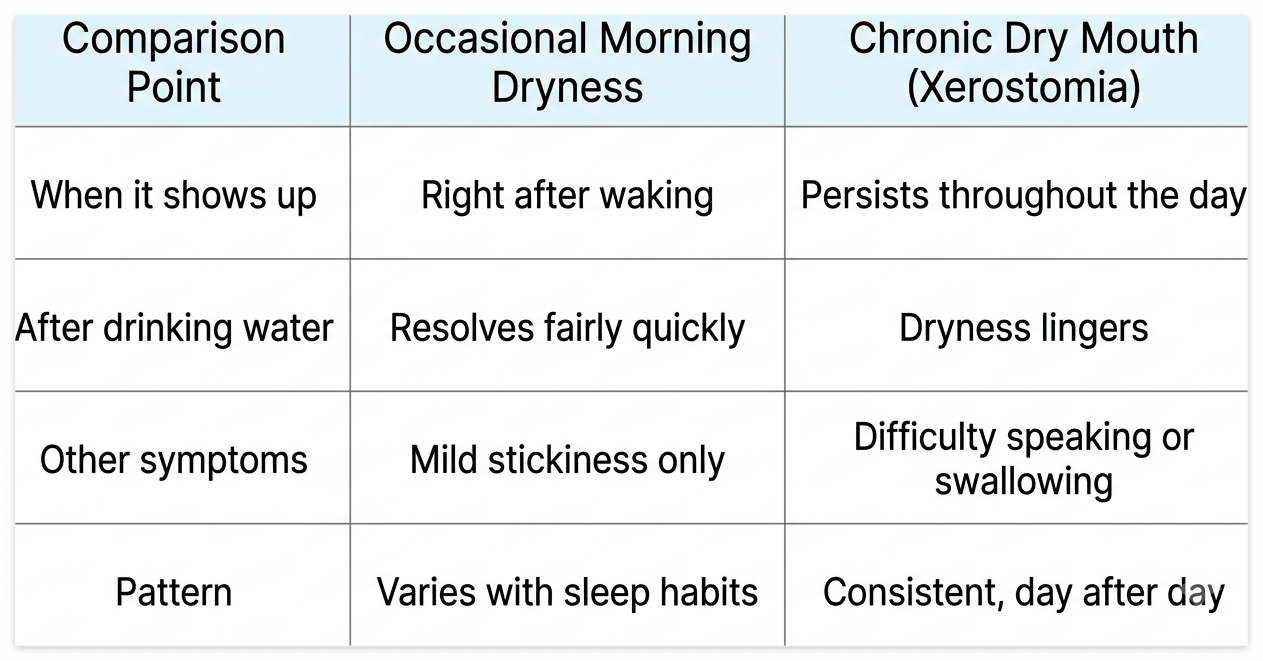
Chronic dry mouth isn't just uncomfortable — it raises the risk of cavities, gum disease, and oral infections because saliva plays a real protective role against bacteria. Certain medications (antihistamines, antidepressants, and blood pressure drugs are common culprits), as well as conditions like diabetes or Sjögren's syndrome, an autoimmune disorder that specifically affects moisture-producing glands, are known to cause this more persistent form of dryness.
A Few Things That Actually Help
Spread out your water intake. Drinking a large amount right before bed or first thing in the morning is less effective than sipping consistently throughout the day. Keeping a glass of water by your bed also makes it easy to take a sip if you wake up during the night.
Try sugar-free gum. The chewing motion stimulates saliva production directly. Sugary candy or drinks might feel like they help in the moment, but they work against your oral health over time.
Track your patterns for a week. Note whether dryness is worse after drinking alcohol or coffee, after a poor night's sleep, or after nights with a stuffy nose. Most people find a clear pattern within just a few days, which makes it much easier to know what to actually adjust.

When It's Time to See a Dentist or Doctor
Occasional morning dryness that clears up after water and brushing usually isn't a concern. Consider getting checked out if you notice any of the following, especially if they last more than a couple of weeks:
- Dryness that doesn't improve even with frequent water intake
- Difficulty chewing or swallowing
- Mouth pain, redness, or bleeding
- Ongoing changes in taste
- Recurring cavities or gum problems
- Dry eyes alongside dry mouth
- Symptoms that started after beginning a new medication
If you suspect a medication is the cause, don't stop taking it on your own — talk to your doctor or pharmacist first, since the relationship between a specific drug and dry mouth needs professional confirmation.
Most of the time, waking up with a sticky mouth comes down to a normal overnight dip in saliva, sometimes made worse by mouth breathing or a dry bedroom. The real question isn't whether it happens occasionally — it's whether it clears up quickly or follows you through the whole day.
This article is for general informational purposes and isn't a substitute for professional medical or dental advice. If dry mouth persists or comes with other symptoms, please consult a dentist or physician.


