You stand up from your desk and for a second, everything goes white or blurry. Maybe your head spins a little too. If it passes in a few seconds, it's easy to shrug off — but if this keeps happening, it's worth understanding what's actually going on.
I get this myself, usually after sitting hunched over a computer for hours and then jumping up too quickly. For a while I just assumed I was tired. Turns out there's a specific reason behind it.

What's Actually Happening in Your Body
When you move from sitting or lying down to standing, gravity shifts instantly, and your circulatory system has to catch up just as fast — redirecting blood flow and adjusting blood pressure to keep your brain properly supplied. If that adjustment lags even slightly, blood flow to the brain dips for a moment, and that's what causes the dizziness, blurred vision, or brief darkening you feel.
This is called orthostatic hypotension, sometimes referred to as postural hypotension. It tends to show up most after standing up abruptly from a long period of sitting, or jumping out of bed too fast.
That said, blurred vision on standing isn't automatically orthostatic hypotension. Dehydration, hot weather, certain medications, and simply having an off day can all produce a similar sensation. Looking at the full context — what you'd been doing right before it happened — matters more than the symptom alone.
Don't Push Through It
If your vision blurs and your head spins the moment you stand, the safest move is to sit back down or steady yourself somewhere secure rather than continuing to move. Waiting for the sensation to pass before walking again significantly lowers your risk of losing balance or falling.
Track the Pattern Instead of Guessing at Causes
Rather than reaching for a supplement or assuming it's something specific, keep a simple note of when it happens: what position you were in, what you'd been doing, how you were feeling that day. A pattern usually becomes obvious after just a few entries — and that pattern tells you far more than any single episode does.
If you're taking blood pressure medication or a diuretic, don't adjust the dose or stop taking it on your own. Talk to your doctor first, since these medications can directly affect how your blood pressure responds when you stand.
When It's Worth Seeing a Doctor
An occasional moment of blurred vision on standing is different from something that happens regularly, and the two call for different responses.
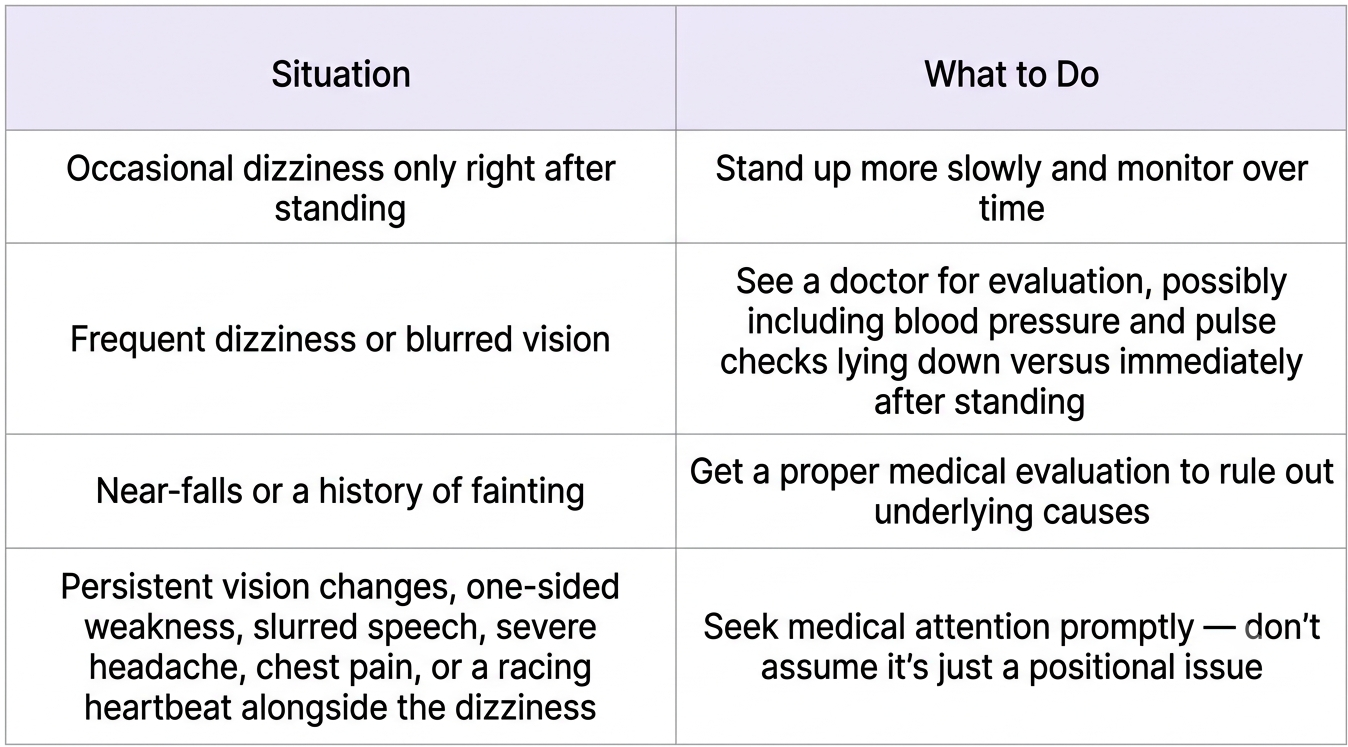
That last category matters most. If any of those symptoms show up together with the dizziness, treat it as something that needs prompt evaluation rather than a routine positional response.
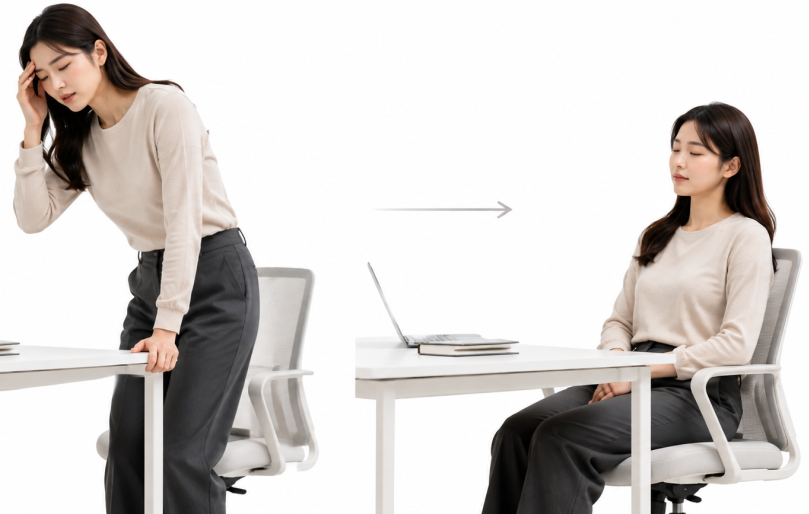
One Small Habit Makes a Real Difference
The simplest fix is slowing down how you stand up. If you've been sitting for a while, move around a bit in your seat before rising instead of jumping straight up. Getting out of bed works the same way — sit on the edge first to let your body adjust, then stand, rather than going from lying flat to fully upright in one motion.
I started doing this deliberately after noticing how often the blurring hit me at my desk, and the frequency dropped noticeably once I slowed down that one transition.
Most cases of vision blurring on standing come down to a temporary lag in blood pressure adjustment. But if it happens often, or shows up alongside other symptoms, it's worth getting a proper evaluation rather than managing it through lifestyle changes alone.
This article is for general informational purposes only and isn't a substitute for medical diagnosis or treatment. If symptoms persist or recur, please consult a healthcare provider.


