You sit down at a health screening, the cuff squeezes, and one number comes back flagged. Everything else on the report looks fine. It's easy to panic, especially if you've never checked your blood pressure before.
A single high reading is not a diagnosis, but it isn't something to wave off either. This guide explains why a reading can run high on the day, how doctors confirm high blood pressure, how to recheck at home, and when to seek care.
Why one reading can run high
Blood pressure changes throughout the day. Rushing to the appointment, feeling nervous, drinking coffee, smoking, or sleeping badly can all push a reading up.
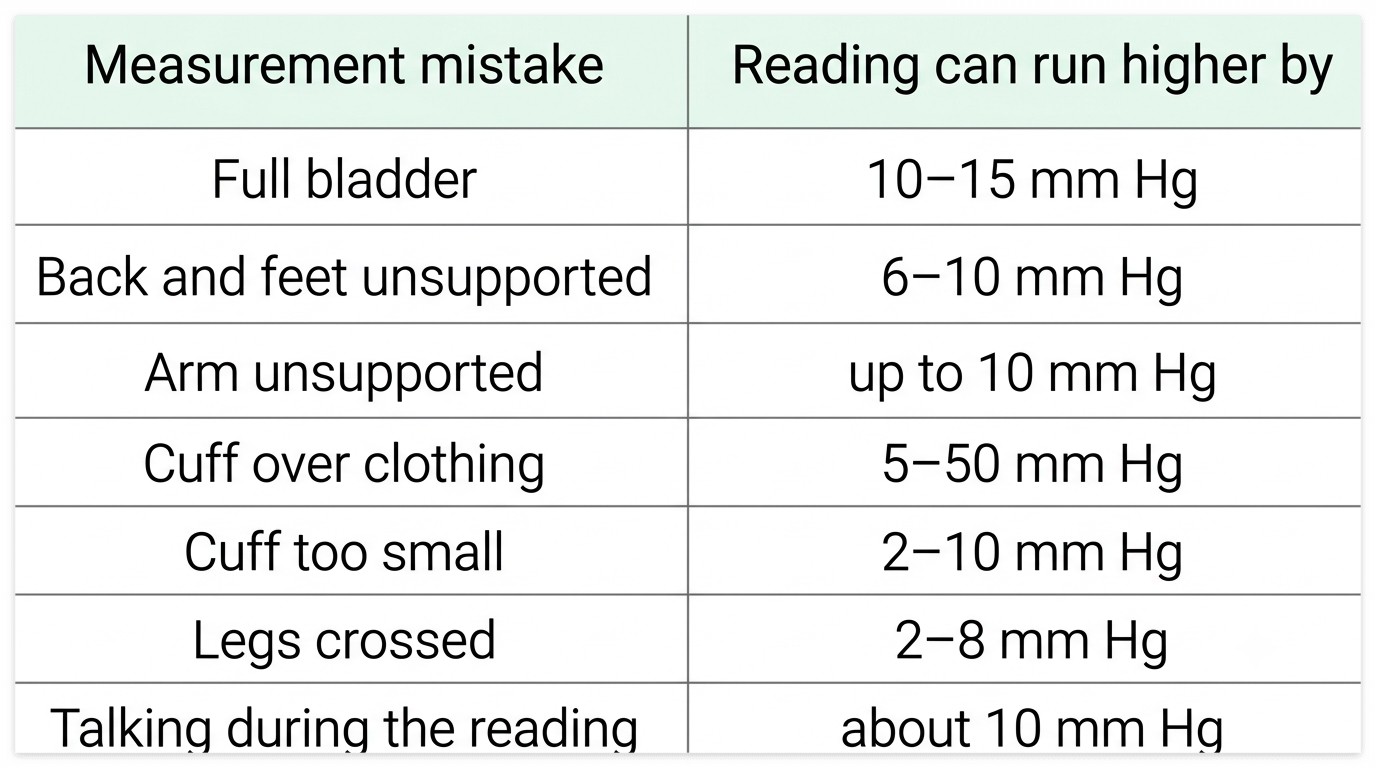
How the measurement is taken matters too. The American Heart Association (AHA) lists common technique mistakes that can inflate a reading. The ranges below are not cumulative.
Two terms come up often here. White-coat hypertension means your pressure is high in a clinic but normal outside it. Masked hypertension is the reverse: normal in the clinic, high at home. Dr. Paul Whelton, who chaired the 2017 U.S. guideline, has said that white-coat hypertension doesn't seem to carry the same added risk as sustained high blood pressure, while masked hypertension appears to carry a similar risk. That's why home readings matter in both directions.
How high blood pressure is diagnosed
U.S. guidelines sort blood pressure into categories. The 2025 AHA/ACC guideline kept the same ranges as the 2017 version.
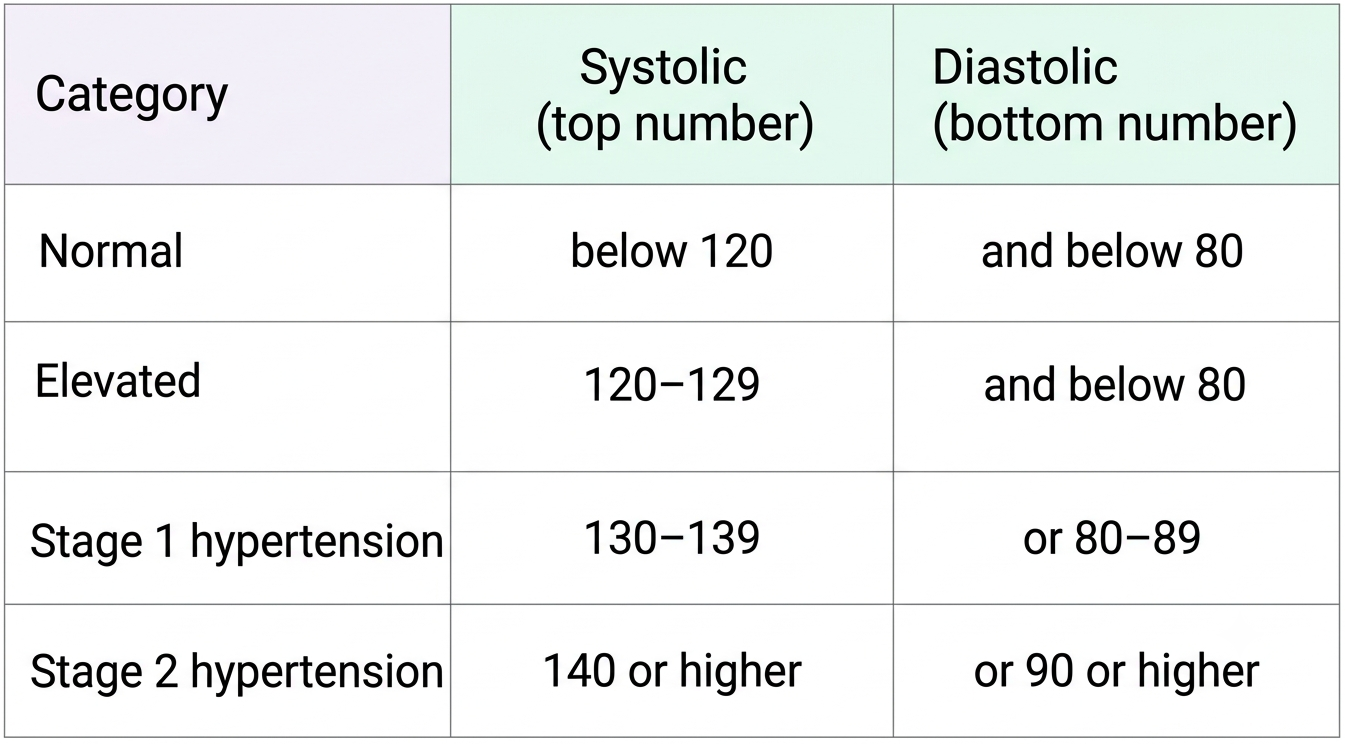
The guidelines don't label anyone from a single reading. They call for an average of at least two careful readings taken on at least two occasions. They also recommend confirming a diagnosis with readings taken outside the office, such as a home monitor. A clinic reading of 140/90 roughly corresponds to 135/85 at home.
How to recheck your blood pressure at home
Getting the conditions right matters more than taking many readings. This routine follows the approach recommended by AHA, the European Society of Hypertension and NICE (the UK's health guidance body).
- Choose a validated upper-arm monitor with a cuff that fits your arm. The 2025 AHA/ACC guideline says to avoid relying on cuffless devices, including smartwatches, for accurate readings for now.
- Prepare. For 30 minutes beforehand, skip caffeine, smoking, exercise and food. Then sit quietly for 3–5 minutes.
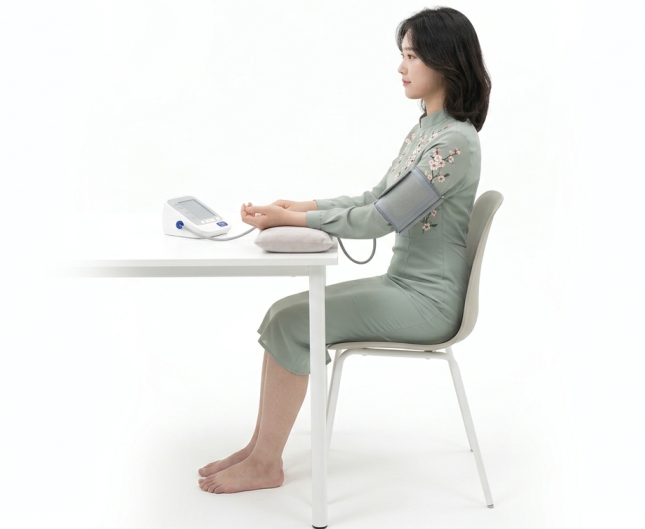
- Sit correctly. Keep your back against the chair, feet flat, and legs uncrossed. Rest your bare arm on a table so the cuff sits at heart level. Stay silent and still while the monitor runs.
- Take two readings, one minute apart, in the morning (before any medication) and again in the evening. If the two readings differ a lot, take a couple more.
- Repeat for about seven days. Some guidance accepts a minimum of five. Write down each number exactly as the screen shows it, without rounding.
- Average the results. Most guidance says to discard the first day, when you're still getting used to the monitor, and average the rest.
What your home results may mean
Use this table as a guide for what to do next. A clinician makes the diagnosis.
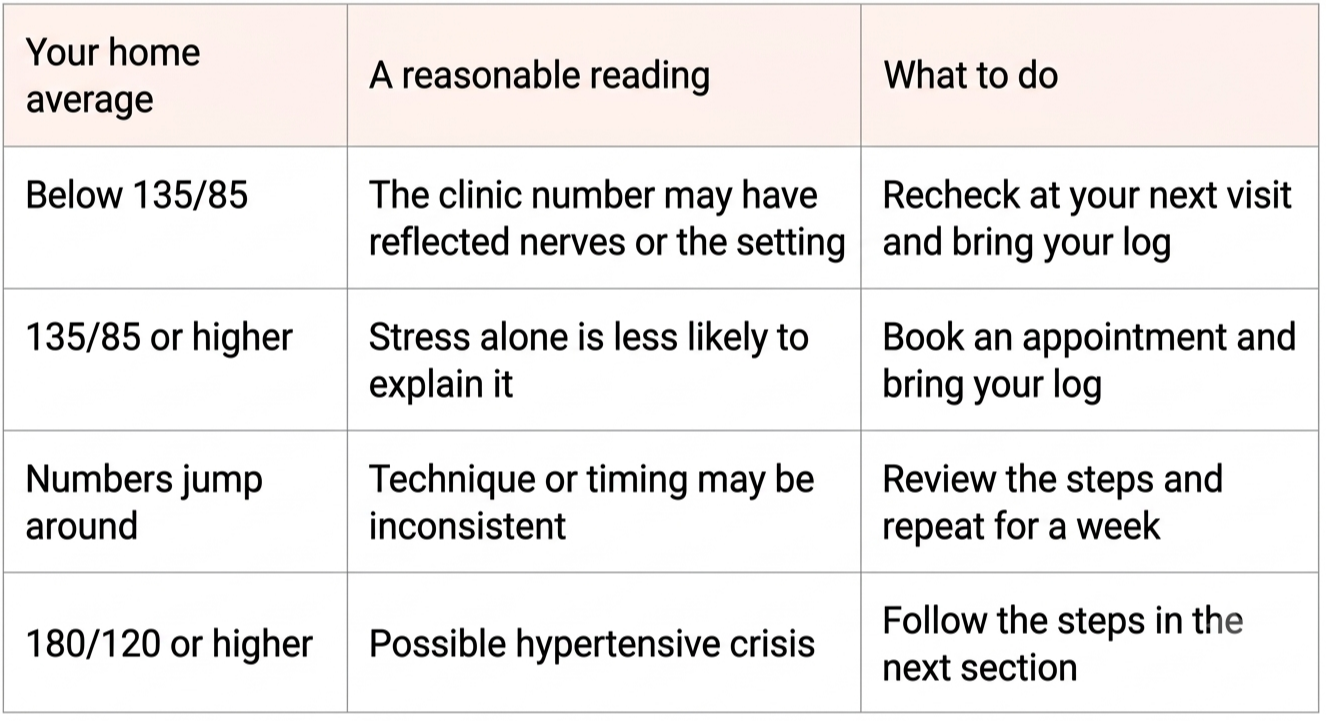
U.S. guidelines start stage 1 at 130/80 in the office. If your home average sits close to that line, mention it to your clinician even if it falls under 135/85.
When to get medical help
See a doctor if properly measured readings stay high, or if your numbers have crept up from one screening to the next. Bring the checkup report, your home log, and a list of your medications and supplements. Some over-the-counter cold medicines contain ingredients that can raise blood pressure.
A reading above 180/120 needs a specific response, according to AHA:
- Wait about five minutes and measure again.
- If it's still that high and you have chest pain, shortness of breath, back pain, numbness, weakness, a change in vision, or difficulty speaking, call 911. Don't wait for it to come down on its own.
- If it's still that high but you feel fine, contact your health care professional right away.
Feeling fine doesn't clear you either. High blood pressure often causes no symptoms, so numbers are the only way to know.
The bottom line
One flagged reading tells you to look closer, not that you have hypertension. Sit quietly, recheck it with proper technique, and log a week of home readings. If those stay high, you'll have solid data to bring to a clinician.
This article is for general information and isn't medical advice. Talk to a qualified health professional about your own readings.
Sources: American Heart Association, "Hypertensive Crisis: When You Should Call 911 for High Blood Pressure" (heart.org); AHA/ACC, "Top Things to Know: 2025 High Blood Pressure Guideline" (professional.heart.org); American College of Cardiology, "2017 High Blood Pressure Guideline FAQ" (acc.org); Target: BP, "Position Your Patient Properly" (targetbp.org); Williams et al., "Schedules for Self-monitoring Blood Pressure: A Systematic Review"; MDLinx, "New hypertension guideline means nearly half of Americans have high BP."


