Ever been drifting off to sleep, completely relaxed, when your leg suddenly jolts like you've missed a step? It's a strange sensation — you weren't startled by anything, yet one leg reacts on its own. If this happens to you, you're far from alone.
I've noticed this myself, usually on days when I've been especially active or worn out. On the roughest days, it's not just the pre-sleep twitch — I've also woken up later in the night with a painful calf cramp. So what's actually going on, and are these two things connected?
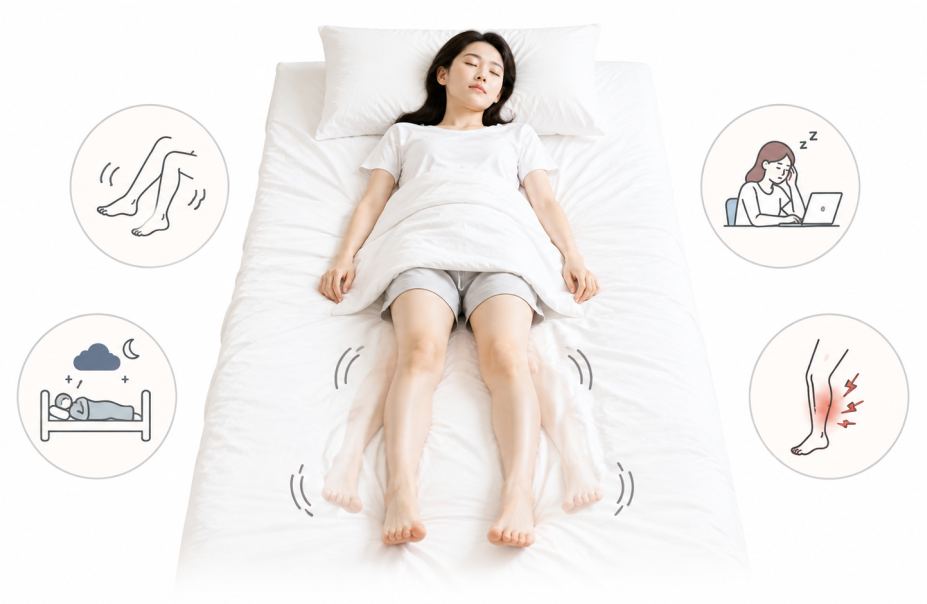
The Hypnic Jerk: Your Body's Transition Glitch
The medical term for that sudden leg jolt right before sleep is a hypnic jerk, sometimes called a sleep start. It happens during the brief window when your body shifts from wakefulness into sleep, and a muscle contracts involuntarily for just a fraction of a second.
Sometimes the whole body jerks at once. Other times, it's localized to one leg or arm, which is why the experience can feel different from night to night. Researchers haven't pinned down an exact cause, but fatigue, sleep deprivation, stress, and late-day caffeine intake are consistently mentioned as factors that make hypnic jerks more frequent or more noticeable.
If you rarely notice this but suddenly experience it on an exhausting day, it's worth taking that as a small signal to check in on your recent sleep habits rather than dismissing it outright.
Hypnic Jerk or Nighttime Leg Cramp? They're Not the Same Thing
Here's where people often mix things up. A hypnic jerk and a nighttime leg cramp (the kind that makes your calf seize up painfully) happen at different points in the sleep process and feel completely different.
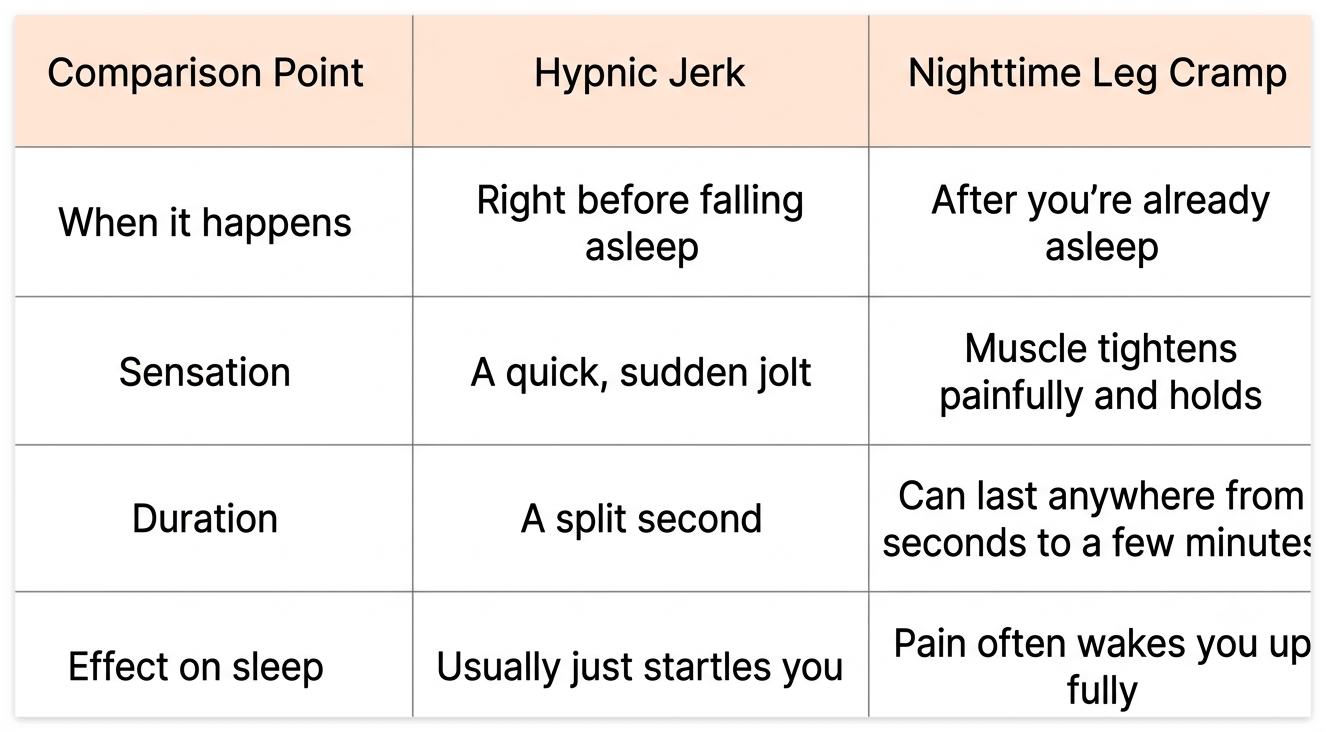
In my own experience, these show up on different nights. The leg jolt tends to happen once, quietly, as I'm drifting off. The calf cramp, on the other hand, shows up later — usually on the nights I've overdone it physically — and it's painful enough to wake me up completely. If you've ever had a middle-of-the-night cramp bad enough to bring tears to your eyes, you know exactly how different that feels from a quick twitch.
The two can happen on the same night, but that doesn't mean they share a single cause. Treating them as separate issues is usually the more accurate approach.
Why Fatigue Seems to Make It Worse
On days when you've been unusually active or short on sleep, your body ends up in a different state of tension than usual. While no single cause fully explains hypnic jerks, multiple sources agree that fatigue and sleep deprivation make the muscle activity right before sleep more frequent and more noticeable.
Add late-afternoon or evening caffeine, or a stressful day, and the process of falling asleep itself can feel less settled. Rather than treating one twitchy leg as a red flag, it makes more sense to look at the bigger picture: how much sleep you've gotten recently, how tired you've been, and how much caffeine you've had.
When Leg Movement Continues Throughout the Night
A single jolt before sleep is one thing. Repeated, rhythmic leg movements that continue after you've fallen asleep are a different pattern worth paying attention to — this is often described as Periodic Limb Movements of Sleep (PLMS).
With PLMS, the legs (or sometimes arms) move at regular intervals throughout the night. The person experiencing it often has no idea it's happening; it's frequently a partner or roommate who notices it first. This is a meaningfully different situation from an occasional pre-sleep jerk, and the two shouldn't be lumped together.

When It's Worth Talking to a Doctor
An occasional hypnic jerk with no pain and no real disruption to your sleep is generally nothing to worry about. That said, a few situations are worth getting checked out:
- Leg movements that happen repeatedly and interrupt your sleep on a regular basis
- A sudden increase in intensity or frequency compared to what you're used to
- Ongoing pain or significant discomfort tied to the movement
- Persistent daytime sleepiness and fatigue even after what feels like a full night's sleep
The same logic applies to nighttime leg cramps. An occasional cramp is common, but if they're happening often or causing significant pain, it's worth getting the underlying cause checked rather than assuming it's just fatigue.
The Takeaway
A single leg jerk right before sleep usually isn't a sign that something's wrong — it's most often explained by the normal transition your body makes between wakefulness and sleep. Still, it's worth remembering that a quick pre-sleep jolt, repeated movement after falling asleep, and a painful nighttime cramp are three distinct things, even though they can feel related.
What matters more than the twitch itself is the pattern: when it happens, how often it recurs, and whether pain or disrupted sleep comes with it. If you're like me and notice it mainly on exhausted days, checking in on your recent sleep and stress levels is a reasonable place to start.
This article is based on general health information and isn't intended to diagnose or treat any individual condition. If symptoms persist, recur frequently, or disrupt your sleep, please consult a healthcare professional.


