You feel fine all day. Then you lie down, and heat seems to rise from inside your body. The blanket feels suffocating, but without it you get cold, so you spend the next hour flipping the pillow and kicking the covers on and off.
I have had nights like that myself, and when I checked with a thermometer, my temperature was often close to normal. That gap between how hot you feel and what a thermometer reads is the best place to start.
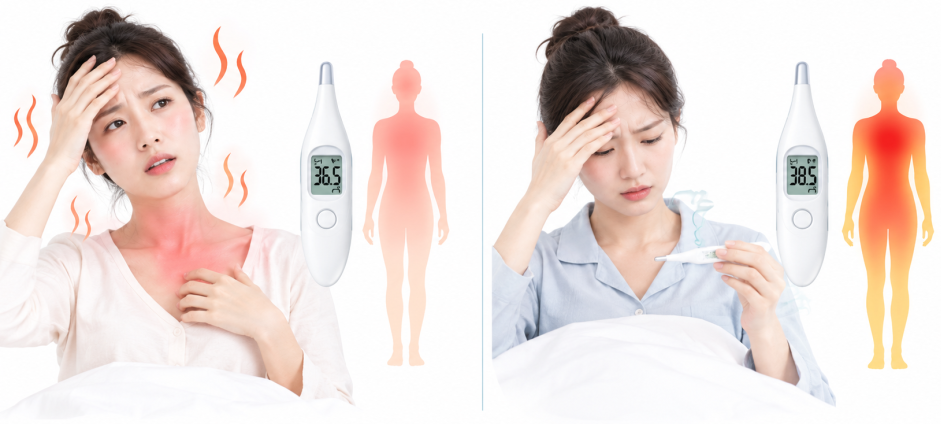
Step one: Is it a fever or just a feeling of heat?
Feeling hot and having a fever are two different things. A fever means your core temperature has actually risen, and doctors commonly use about 100.4°F (38°C) as the cutoff. If your thermometer reads normal but you feel overheated, the cause is more likely your environment, habits, or hormones than an infection.
To get a useful reading, rest for 10 to 15 minutes first, since exercise, hot drinks, and a warm bath all skew the number. Then take your temperature at about the same time on a few different nights. A repeated real fever deserves a medical check on its own.
Why your body may run hot at bedtime
Your body is designed to shed heat at night. Core body temperature follows a daily rhythm. It starts dropping in the evening, roughly an hour or so before your usual bedtime, and reaches its lowest point during sleep. To cool down, your body pushes blood toward the skin, especially the hands and feet, and releases heat into the air. If your bedding is thick or the room is stuffy, that heat has nowhere to go, and you feel it. A late workout or a busy evening can add to it.
What you ate and drank matters. A heavy, greasy, or spicy meal close to bedtime can leave you feeling flushed, especially in the face and upper body. Caffeine works against the drowsiness your body builds up during the day. Alcohol may make you sleepy at first, but it tends to fragment sleep later in the night, which can leave you restless and warm.
Stress and anxiety can turn up the heat. When you are tense, your heart rate rises and you may feel warm or flushed. This alone does not point to any specific condition, so look at the other symptoms that come with it.
Hormonal changes are a common reason. Around perimenopause and menopause, many women get hot flashes, a sudden wave of heat in the face, neck, and chest, along with night sweats. Palpitations or anxiety sometimes come with them.
Thyroid problems are worth ruling out. An overactive thyroid can bring heat intolerance, extra sweating, weight changes, hand tremors, and a fast pulse. If several of these appear together, mention them to a doctor.
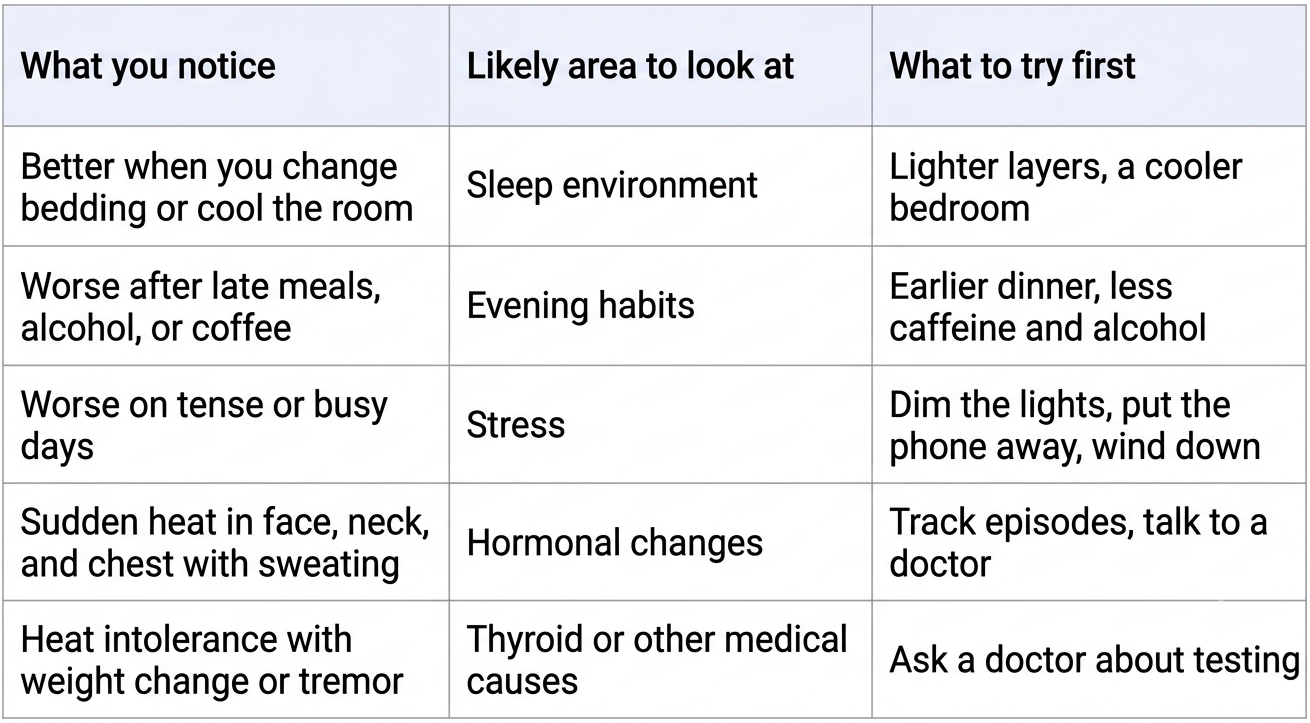
A quick way to narrow down the cause
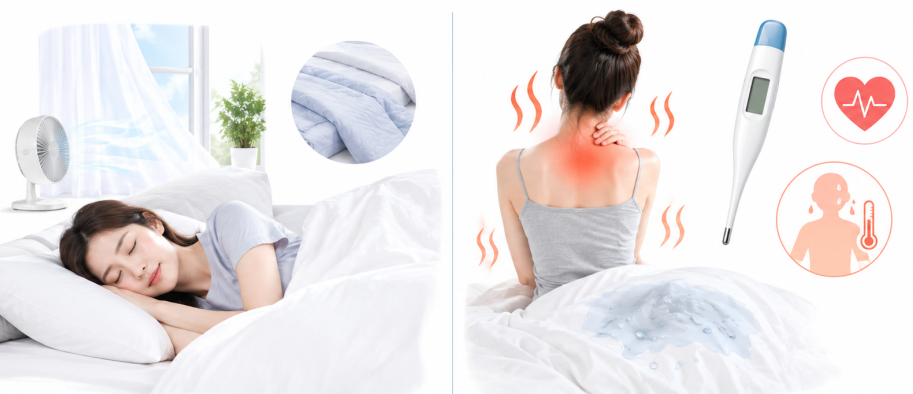
What helps you cool down before sleep
Use layers instead of one heavy blanket. A few thin layers let you adjust through the night without fully waking up.
Take your warm shower or bath earlier than you think. A review that pooled results from 17 studies found that bathing in water of roughly 104 to 109°F (40 to 43°C) about one to two hours before bed improved sleep efficiency and helped people fall asleep faster. The warm water draws blood to the skin, and your core temperature then drops more quickly afterward. If a hot bath right before bed leaves you sweating, move it earlier or make it cooler.
Finish dinner a few hours before bed. Cut back on caffeine in the afternoon and evening, and go lighter on alcohol.
Give your mind a runway. Spend the last half hour dimming lights and stepping away from screens so your body can shift out of alert mode.
Keep a two-week log. Note dinner time, caffeine, alcohol, exercise, and room temperature next to how hot you felt. A pattern often shows up, and a written record makes a doctor's visit far more productive.
When to see a doctor
Get medical advice if the feeling comes with any of these:
- Night sweats that soak your clothes or sheets, even in a cool room
- Unexplained weight loss
- An actual fever on the thermometer
- A racing or pounding heart, or chest discomfort
- Heat episodes that last for weeks despite changes to your habits and bedroom
The bottom line
Most bedtime heat comes from the room, the routine, or normal body temperature shifts, and a few small changes often make a real difference. If yours persists or comes with any of the warning signs above, get it checked instead of guessing.
This article is for general information and does not replace medical advice, diagnosis, or treatment.


