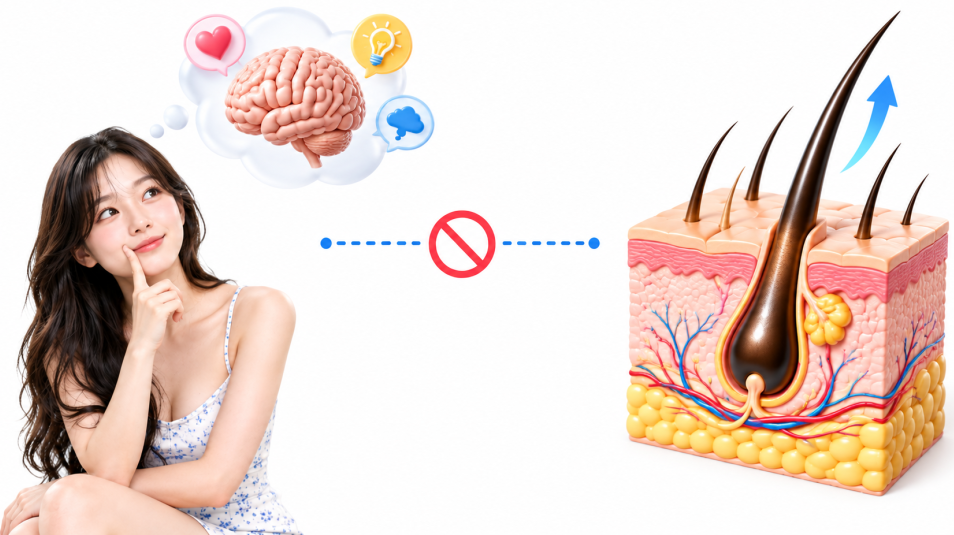
You get a haircut, and a few weeks later your bangs already hang in your eyes. A friend jokes that you must be thinking about sex a lot. It's an old line, and plenty of people half-believe it.
The short answer: no evidence shows that sexual thoughts speed up hair growth. The myth does have a real biological seed, though, because sex hormones do affect hair. Here is how that works, and why your hair can still seem to grow faster than it should.
How Fast Does Hair Actually Grow?
Scalp hair grows about half an inch (roughly 1 cm) per month on average, according to dermatology organizations such as the American Academy of Dermatology. Your own rate depends on genetics, age, and overall health.
Each follicle also runs on a cycle:
- Anagen (growth phase): lasts several years, and the strand keeps lengthening.
- Catagen (transition phase): growth stops for a short period.
- Telogen (resting phase): lasts around three months, after which the hair sheds and the cycle restarts.
Because this cycle plays out over months and years, a passing thought can't rewrite it. No known pathway carries a fleeting mental state to the follicle and changes how it behaves.
Where the Hormone Connection Comes From
The myth survives because androgens, the hormone family that includes testosterone, do change hair. Everyone has them, women included. The catch is that they push hair in opposite directions depending on where it grows.
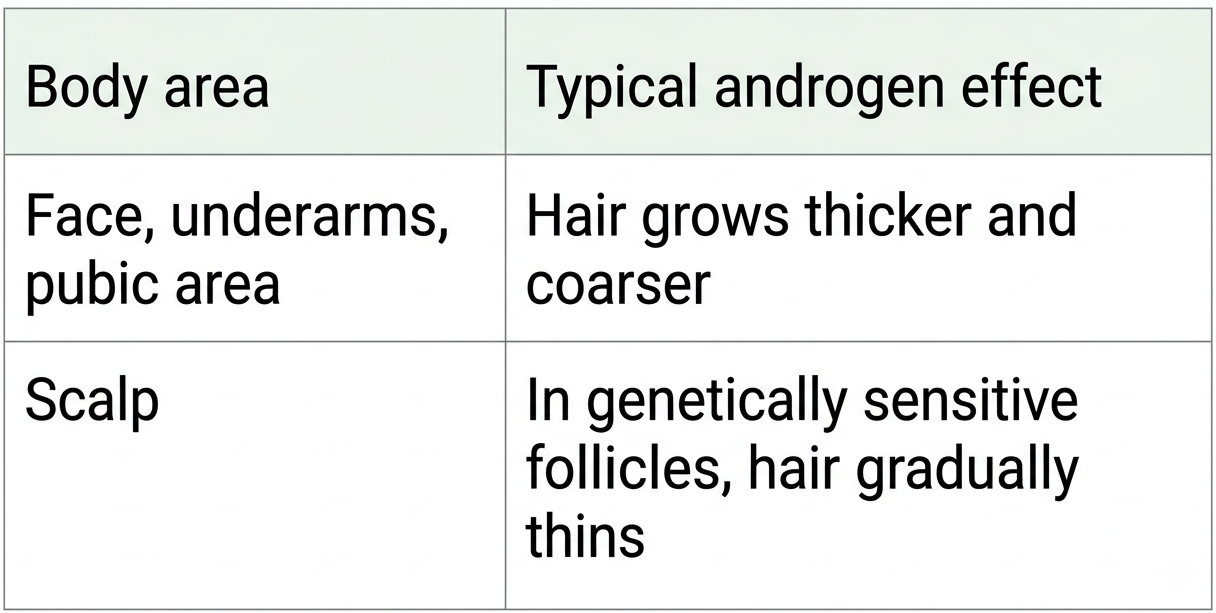
That scalp effect is androgenetic alopecia, better known as male-pattern or female-pattern hair loss. It involves dihydrotestosterone (DHT), a more potent form of testosterone. Follicles that are genetically sensitive to DHT shrink over time and produce finer, shorter hair.
So "more sex hormones means faster hair growth" doesn't hold up. The same hormone can thicken a beard and thin the hair on top of your head, and your genes decide which way your scalp leans.
Sex Drive and Hair Growth Run on Separate Tracks
Libido responds to hormones, but also to stress, sleep, relationship quality, and how you feel on a given day. Hair growth responds to genetics, age, nutrition, and scalp health. Two things that happen to change around the same time aren't necessarily linked.
Why Your Hair Can Seem to Grow Faster Than It Does
Most of the "it grows so fast" feeling comes from perception:
- After a short cut, half an inch of new growth changes the look of your hair far more than it would on long hair.
- Bangs sit close to your eyes, so small changes show up quickly.
- Checking the mirror often makes you notice every small change.
- Natural variation means some people's hair simply grows faster than their friends'.
Daily growth is too slow to see, so the change seems to arrive all at once.
What Does Influence Hair Growth
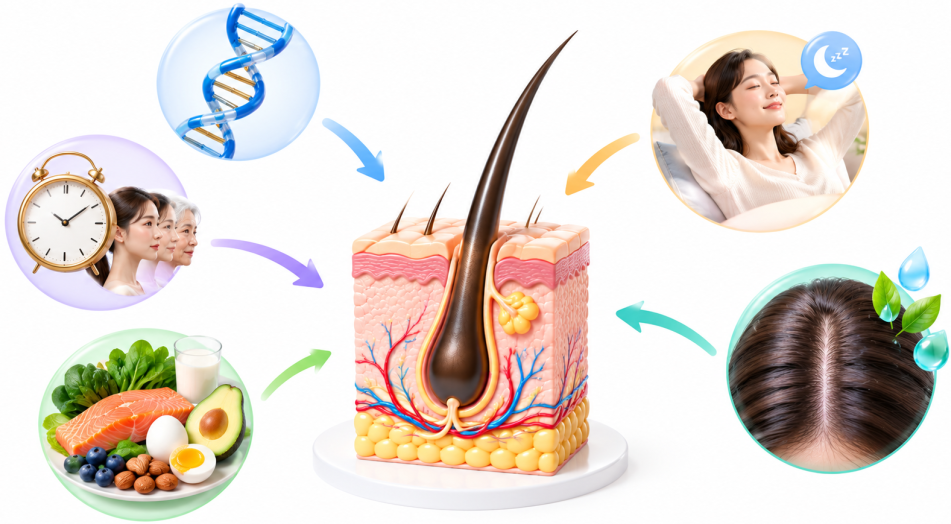
- Genetics: set your baseline hair thickness, growth pattern, and sensitivity to androgens.
- Age: growth slows and density often drops over the years.
- Nutrition: severe calorie restriction or a diet that leaves you short on nutrients can affect hair.
- Stress and illness: a major stressor can push many follicles into the resting phase at once. That leads to noticeable shedding, often two to three months later. The condition is called telogen effluvium.
- Scalp condition: heavy inflammation or flaking can interfere with healthy growth.
When to See a Dermatologist
Growing fast is not a medical concern. These signs deserve a professional look:
- Much more shedding than usual that lasts for weeks
- Thinning at the crown or along the hairline
- Ongoing itching, burning, or flaking on the scalp
- Round, coin-sized bald patches
FAQ
Do higher hormone levels make hair grow faster?
Not in any simple way. The effect depends on the body area and your genetic sensitivity. Androgens can thicken facial hair and thin scalp hair in the same person.
Does sexual activity affect hair loss or growth?
No established link exists in either direction. Common claims about masturbation or sex changing hair growth lack solid evidence.
Can I make my hair grow faster?
Growth speed is mostly set by genetics, so big changes aren't realistic. A balanced diet, good sleep, and gentle scalp care help keep hair in its best condition.
The Takeaway
The idea that sexual thoughts speed up hair growth is a joke that stuck around. Hormones do shape hair, but they act differently on different parts of the body, so they can't explain how fast your hair grows. If you notice real changes such as heavy shedding or thinning, see a dermatologist rather than trying to explain them away.
This article gives general health information. For diagnosis or treatment, talk with a qualified healthcare professional.


