If you've ever finished washing dishes, touched the back of your hand, and noticed it felt rougher than usual, you're not alone.
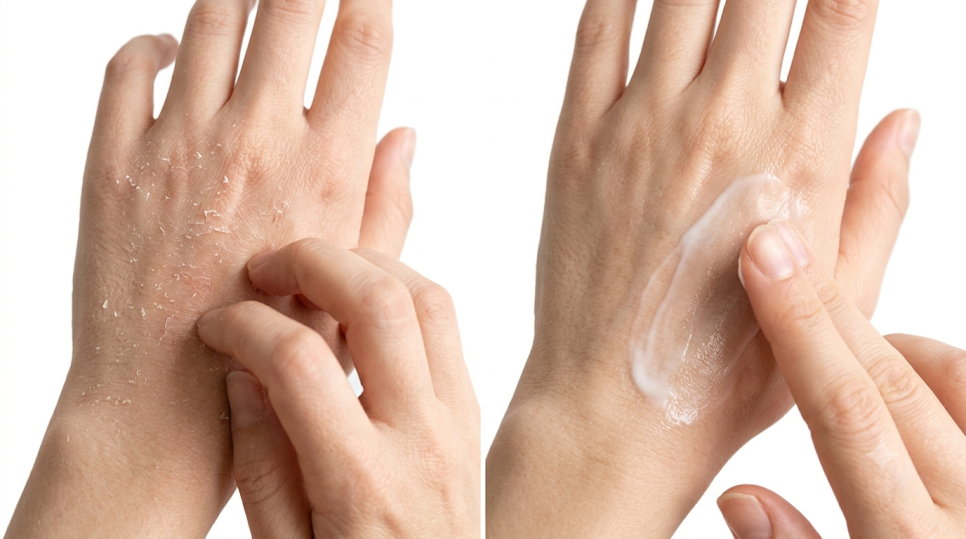
Frequent handwashing is essential for hygiene, but it can also take a toll on your skin. Many people notice that the backs of their hands become dry, flaky, or rough long before other areas of the skin show signs of dryness.
So why does this happen? And more importantly, what can you do about it without cutting back on proper hand hygiene?
Let's take a closer look at the causes of dry hands after washing and the practical habits that help protect your skin.
Why Does Handwashing Make Skin Feel Rough?
Your skin has a natural protective barrier made up of water, oils, and lipids. This barrier helps retain moisture and shields the skin from environmental irritants.
Every time you wash your hands with soap or detergent, you remove germs and dirt, but you also remove some of those protective oils.
Normally, the skin can recover. However, when handwashing becomes frequent throughout the day, the skin may not have enough time to rebuild its protective layer before the next wash.
The result?
- Increased moisture loss
- Dry, tight skin
- Rough texture
- Visible flaking or peeling
People who wash their hands frequently, wash dishes by hand, work in healthcare, food service, childcare, or other hygiene-focused environments often notice these changes more quickly.
Why Do the Backs of the Hands Dry Out First?
A common question is:
Why do the backs of my hands become rough while my palms seem relatively fine?
The answer lies in skin structure.
The skin on the back of the hand is thinner and produces less protective oil than many other areas. Because it has less natural protection, it tends to react more quickly to repeated washing, detergents, cold weather, and friction.
Back of the Hand vs. Palm
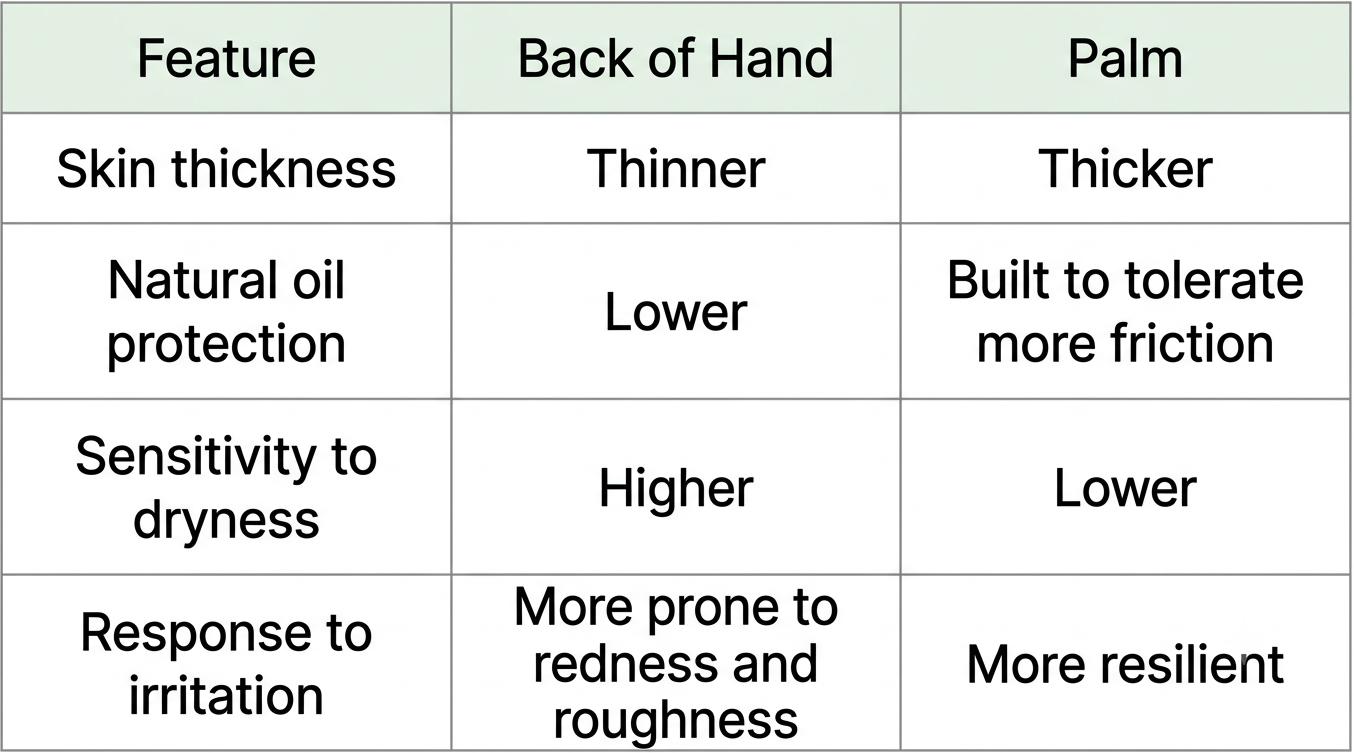
This is why many people notice dryness on the backs of their hands before they experience problems elsewhere.
Water Temperature Matters More Than You Think
When your hands feel cold, hot water can seem comforting. Unfortunately, your skin may disagree.
Hot water can strip away natural oils more efficiently than lukewarm water, leaving skin feeling drier afterward.
If your hands frequently feel rough or tight after washing, consider switching to lukewarm water. You can still clean your hands effectively without exposing your skin to unnecessary stress.
A small adjustment in temperature often makes a noticeable difference over time.
Are You Scrubbing Too Hard?
Good hygiene does not require aggressive scrubbing.
Many people assume that rubbing harder equals cleaner hands, but excessive friction can irritate already-dry skin.
This applies not only to washing but also to drying.
Instead of:
- Scrubbing vigorously with soap
- Rubbing with a rough towel
Try:
- Washing gently but thoroughly
- Patting hands dry with a soft towel
- Avoiding unnecessary friction on already sensitive areas
For skin that is already dry, reducing mechanical irritation can be just as important as moisturizing.
Should You Remove Flaky Skin?
When white flakes or patches of dry skin appear, it's tempting to peel, pick, or exfoliate them away.
In many cases, this only worsens the problem.
Flaking skin is often a sign that the skin barrier has been disrupted. Removing those flakes aggressively may expose even more vulnerable skin underneath.
Instead of focusing on removing the flakes, focus on restoring moisture.
With consistent hydration and protection, the skin often sheds and repairs itself naturally.
Dry Skin or Contact Dermatitis?
Not every rough patch on the hands is simply dryness.
Sometimes repeated exposure to soaps, detergents, cleaning products, fragrances, or other substances can contribute to contact dermatitis, a form of skin inflammation.
Signs That May Need Medical Attention
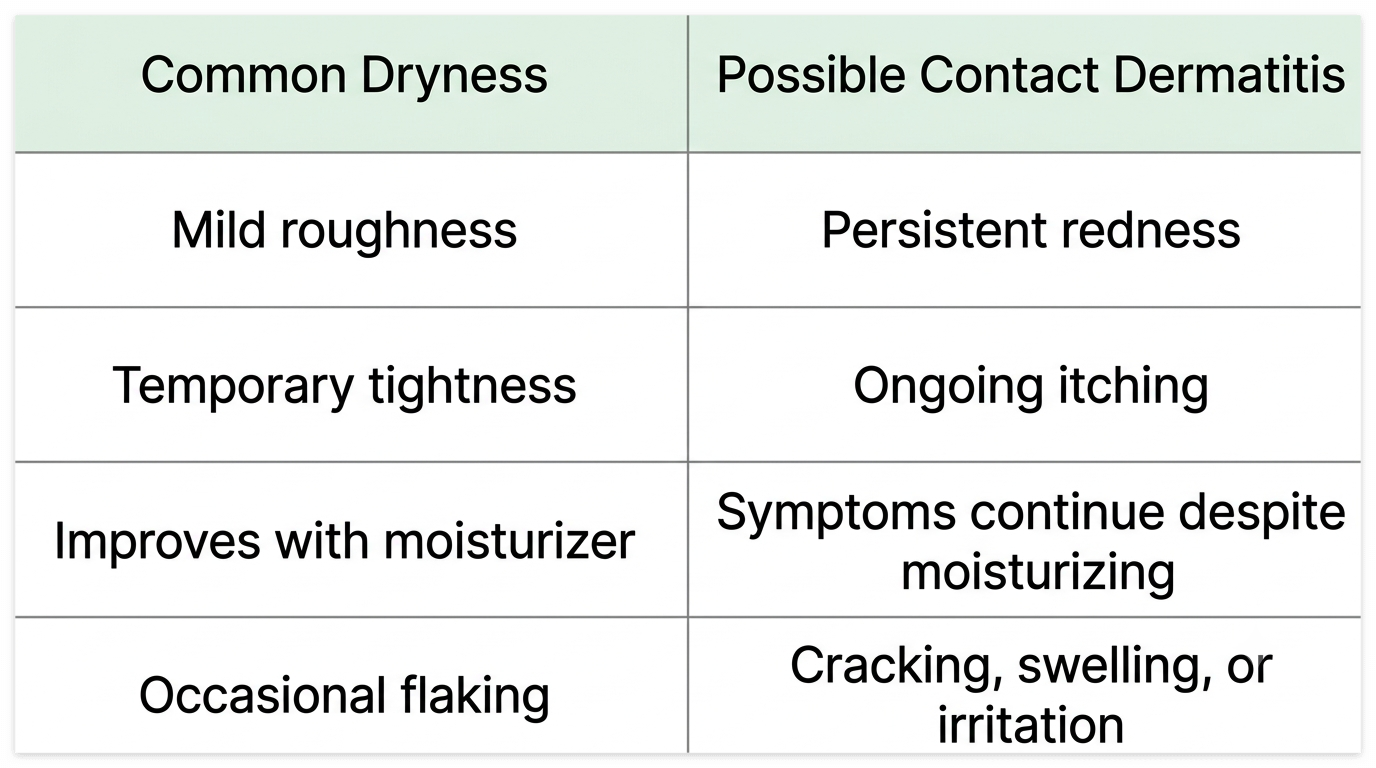
If redness, itching, cracking, or skin irritation continues despite regular moisturizing, it may be worth speaking with a dermatologist rather than assuming it's ordinary dryness.
The Best Time to Apply Hand Cream
When it comes to moisturizing, timing can be more important than quantity.
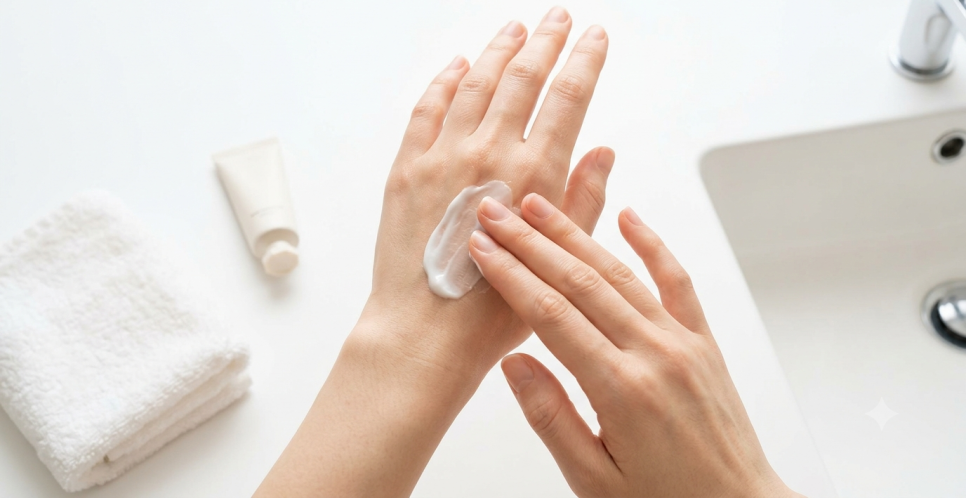
Many people apply hand cream only once at night. While that can help, one of the most effective moments to moisturize is immediately after washing your hands.
Here's a simple routine:
- Wash your hands.
- Gently dry them.
- Apply moisturizer while the skin is still slightly damp.
- Reapply throughout the day as needed.
This helps lock in water before it evaporates from the skin's surface.
Personally, keeping a small tube of hand cream near the kitchen sink and another in a bag has made it much easier to remember. Consistency tends to work better than applying a large amount only once in a while.
Simple Habits That Can Reduce Hand Dryness
You don't need to stop washing your hands to protect your skin.
Instead, focus on reducing unnecessary stress on the skin barrier.
Practical Hand Care Checklist
- Use lukewarm water instead of hot water
- Wash gently rather than scrubbing aggressively
- Pat hands dry instead of rubbing vigorously
- Apply moisturizer after washing
- Wear gloves when using strong cleaning products
- Avoid picking at dry or peeling skin
None of these habits is complicated on its own, but together they can significantly improve skin comfort and hydration.
Frequently Asked Questions
Can frequent handwashing permanently damage the skin?
In most cases, no. Dryness caused by frequent washing often improves when the skin barrier is supported with proper moisturizing and gentle hand care.
Is hand sanitizer more drying than soap?
Alcohol-based hand sanitizers can contribute to dryness for some people, especially with repeated use. Moisturizing afterward can help reduce irritation.
Why do my hands get worse in winter?
Cold air, low humidity, indoor heating, and frequent handwashing can all increase moisture loss, making dry hands more common during colder months.
When should I see a dermatologist?
Consider professional evaluation if you experience persistent redness, itching, pain, cracking, swelling, or symptoms that do not improve despite regular moisturizing.
Final Thoughts
Rough skin on the backs of your hands is often a sign that repeated washing, detergents, and daily friction are disrupting the skin's natural protective barrier.
The solution is rarely to wash your hands less. Instead, it's about washing smarter.
Using lukewarm water, being gentler during washing and drying, and moisturizing immediately afterward can help protect your skin while maintaining good hygiene habits.
If symptoms become persistent or include redness, itching, cracking, or inflammation, seeking medical advice is the safest next step.
This article is intended for general informational purposes only and should not be considered medical diagnosis or treatment. If symptoms persist or worsen, consult a qualified healthcare professional.


