Your left eye feels scratchy. Or maybe it's the right one. It's dry, a little sore, or it feels like something is stuck in it. The other eye feels completely fine.
Most people wait a day or two and hope it goes away. That's often reasonable, but not always. This guide explains how to decide whether you can wait, when to book an appointment, and which symptoms mean you should get care right away.
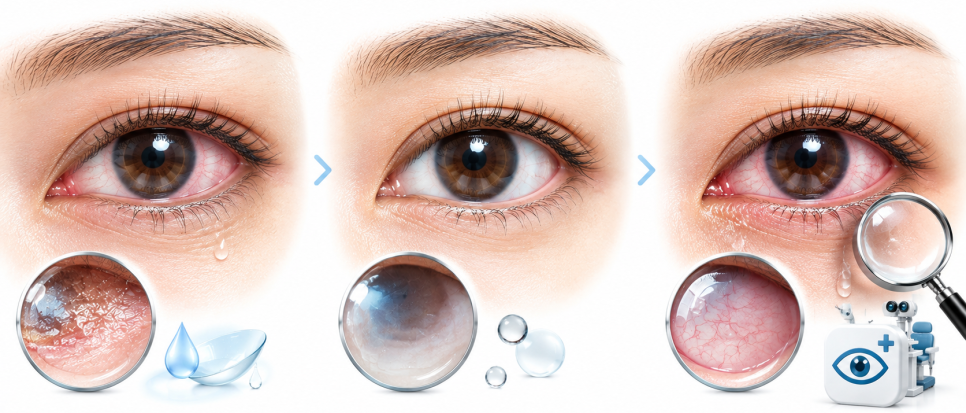
Why Only One Eye Hurts
When just one eye bothers you, the cause is often local. Common culprits include:
- Dryness or screen strain. Staring at a screen reduces how often you blink, and one eye can dry out more than the other.
- A small foreign object, such as an eyelash or dust.
- Eyelid irritation or inflammation, including a clogged oil gland along the lid edge.
- Conjunctivitis ("pink eye"), which often starts in one eye.
- Contact lens irritation.
- A scratch on the cornea, the clear front surface of the eye.
These problems can feel alike. Gritty, burning, watery, red, and light-sensitive are all vague descriptions, so it's hard to tell the cause by feel alone. That's why the pattern matters more than the label. Ask yourself: Is it getting better? Is it getting worse? Has anything new appeared?
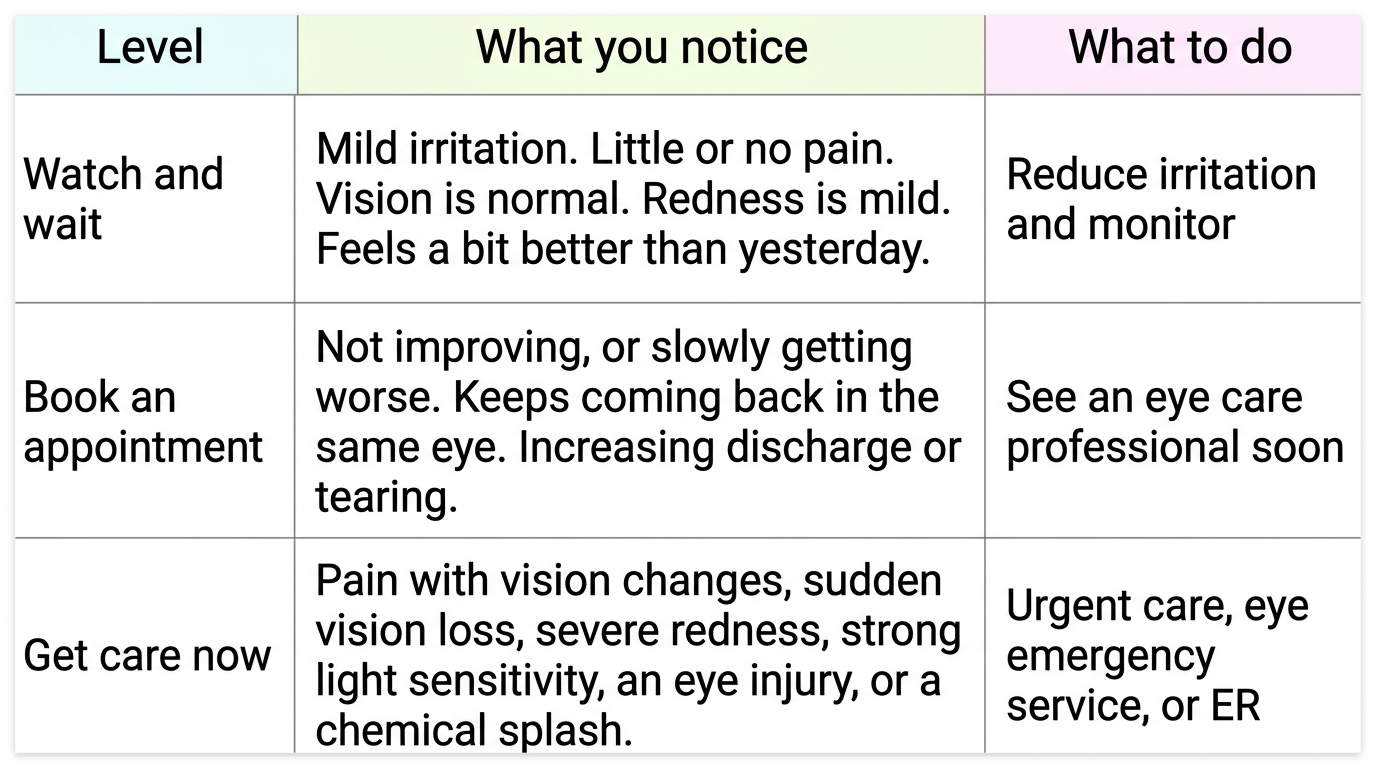
The Three-Level Check
Use this table as a quick guide. It isn't a diagnosis, and when in doubt, choose the more cautious row.
If Your Symptoms Are Mild: What to Do
If you have no warning signs, a few simple steps make sense:
- Don't rub the eye. Rubbing can make irritation worse, especially if there's a speck of dust or a minor scratch on the cornea.
- Give your eyes a screen break. Look into the distance and blink fully and often.
- Move away from direct airflow. Fans, car vents, and air conditioning can dry out your eyes.
- Take out your contact lenses and wear glasses until the eye feels completely normal.
- Keep a simple note. "Better," "same," or "worse" each day is enough.
Here's the key idea: the direction of change matters more than the number of days. If you feel clearly better within a day or two, an irritation or dry eye is more likely. If the discomfort stays the same or builds, treat that as a signal to get it checked.
Warning Signs That Mean Don't Wait
Get prompt medical attention if one-eye discomfort comes with any of these:
- Sudden vision loss, or part of your vision looks blocked or shadowed
- Significant eye pain, especially with blurry vision
- Severe redness or strong sensitivity to light
- Pain when you move your eye
- New flashes of light, or a sudden shower of floaters (small specks drifting across your vision)
- Halos around lights with eye pain, headache, or nausea
- Any injury to the eye
Contact lens wearers should take extra care. If you're wearing lenses and your eye becomes painful or red, take them out and contact an eye doctor promptly. Lens-related infections can progress quickly, and it's not a good situation for "wait and see."
Foreign Objects and Chemical Splashes
These two situations are very different, so treat them differently.
Something small in your eye, like dust or an eyelash: Rinse with clean water or sterile saline. Don't dig at an object that seems stuck in the eye, and don't rub. If pain, tearing, or blurry vision continues after rinsing, get an exam.
Chemicals, like cleaning products or bleach: This is an emergency. Start rinsing right away with plenty of clean water. Eye organizations generally recommend rinsing for about 15 minutes or longer, and then get medical care quickly. Don't wait to see how it feels. If someone is with you, have them help arrange transport while you keep rinsing.
How to Prepare for Your Appointment
A few notes make the visit more productive:
- When it started, and whether it's improving, the same, or worse
- How it feels (gritty, burning, sharp pain, itchy, watery)
- Discharge, redness, light sensitivity, or vision changes
- Any recent injury, and whether you wear contact lenses
- Eye drops or other medications you're using
If you're unsure who to call, an optometrist or ophthalmologist can evaluate most eye complaints. For severe pain, sudden vision changes, or injuries, go to urgent care or an emergency room.
The Bottom Line
There's no magic number of days after which one irritated eye needs a doctor. Look at three things instead: Is it improving? Is it staying the same? Have new symptoms appeared? If your eye looks normal but still feels wrong, that's also a fair reason to get checked.
This article is general health information and isn't a diagnosis or a substitute for professional medical advice. If you have sudden vision changes, severe eye pain, severe redness, an eye injury, or chemical exposure, seek medical care immediately.
Sources and further reading
- American Academy of Ophthalmology (aao.org), patient pages on eye pain, red eye, eye injuries, and chemical burns
- U.S. Centers for Disease Control and Prevention (CDC), Contact Lens Health
- MedlinePlus (U.S. National Library of Medicine), eye health topics


