When a parent in their 70s or 80s needs a biopsy under general anesthesia, the caregiver’s to-do list grows fast. What can they eat? Which supplements need to stop? When does fasting start? This guide covers the practical answers, based on anesthesiology society guidance, and flags where your own hospital’s instructions will override it.
Follow the hospital’s written instructions first
General guidelines describe a typical healthy patient. Your parent’s anesthesia team knows their medical history, medications, and procedure. If this guide and the hospital’s instructions disagree, follow the hospital. Hospitals can delay or cancel a procedure when a patient does not follow fasting rules.

Fasting rules at a glance
Fasting lowers the risk of pulmonary aspiration. Under general anesthesia, protective airway reflexes weaken, and stomach contents can travel into the lungs and cause serious problems such as aspiration pneumonia.
The American Society of Anesthesiologists (ASA) publishes these minimum fasting times for healthy patients having elective procedures:
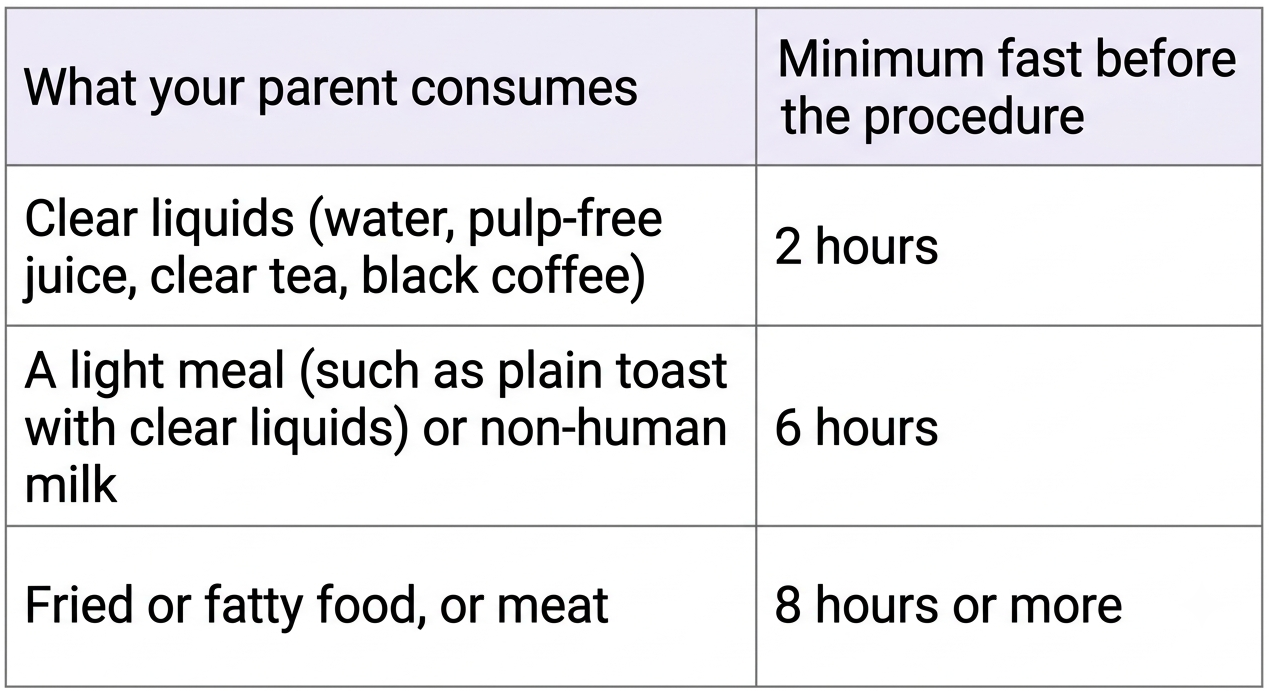
Three caveats matter for older patients.
- These times apply to healthy patients. Conditions that slow stomach emptying, such as diabetes, GERD, or a hiatal hernia, can change the plan. Tell the anesthesia team about them.
- Many hospitals use stricter instructions. Some tell patients to stop all food after midnight or at a set hour. Use the hospital’s version.
- Ask about weight-loss and diabetes injectables. The ASA updated its guidance on GLP-1 drugs in 2024, and teams handle them differently. Report any use in advance.
Ask the team directly about prescribed medicines on the morning of the procedure. Some patients may take them with a sip of water, and others may not.
Medications and supplements to review
Older adults often take several medicines at once, and the anesthesia team needs the full list. The goal is a written inventory, not a guess.
Do not stop these on your own. Blood thinners and antiplatelet drugs such as aspirin, warfarin, and clopidogrel are often prescribed for heart or stroke risk. Stopping them without guidance can be dangerous. The prescriber and the surgical team decide whether and when to pause them. The same goes for heart medications, insulin, and other diabetes drugs.
Ask about pausing these. Hospitals often ask patients to stop certain items ahead of time because they may raise bleeding risk or affect how other drugs work:
- Fish oil, krill oil, and high-dose vitamin E
- Ginkgo, garlic, ginseng, and ginger supplements, plus concentrated extracts or juices made from them
- Anti-inflammatory painkillers such as ibuprofen and naproxen
- Herbal products with unclear ingredients
The lead time varies. Some hospitals say one week and others say two for supplements, so rely on the written instructions rather than a number from a website.
Food in the week before
Keep it simple. Soft, protein-rich foods such as eggs, fish, tofu, and yogurt help many older adults maintain strength, and whole grains and cooked vegetables are easy on the stomach. Drink fluids steadily until the fasting window starts.
Two cautions apply. People with kidney disease may need limits on protein or fluids, so ask their doctor before you change the diet. And skip new supplements or major diet changes right before the procedure.
For the last meal, avoid fried or fatty food and meat. Those foods take longer to leave the stomach, which is why the ASA asks for a longer fast after them.
Post-op delirium: what families can do
Some older adults wake up confused, restless, or unsure where they are. This is delirium, a temporary state of confusion and disorientation that is common after surgery in people over 65. It differs from dementia, and it often improves as the person recovers.
The American Geriatrics Society says delirium is preventable up to 40% of the time in hospitalized older adults. The ASA’s Perioperative Brain Health Initiative suggests these steps:
- Ask for a quick cognitive check before the procedure, so the team has a baseline.
- Have a family member or friend stay with the patient and report anything unusual.
- Ask the doctor before giving sleep aids or anxiety medicines after the procedure.
- Request glasses and hearing aids as soon as possible after the procedure.
- Bring familiar items: a family photo, a clock, a calendar. A room with a window helps a patient tell day from night.
When your parent seems disoriented, keep your voice calm. Tell them where they are and that the procedure went well. If confusion worsens or they cannot settle, tell the nurse right away.
What to bring
- A complete, up-to-date list of medicines and supplements, with doses
- Notes on allergies, past anesthesia reactions, and chronic conditions
- The hospital’s instruction sheet and contact numbers
- Glasses, hearing aids, and dentures, with the hospital’s rules on handling them
- A clock, a calendar, and a family photo
This article is general health information and does not replace advice from your parent’s doctors. Fasting times, medication changes, and supplement instructions depend on the individual and the hospital, so confirm every detail with the surgical and anesthesia team.
Sources
- American Society of Anesthesiologists, “Practice Guidelines for Preoperative Fasting and the Use of Pharmacologic Agents to Reduce the Risk of Pulmonary Aspiration” (2017)
- University of Iowa Health Care, “Providers’ fasting guidelines for adults” (uihc.org)
- ASA Perioperative Brain Health Initiative, “Six Tips to Reduce Confusion in Older Patients After Surgery” (asahq.org)
- Health in Aging (American Geriatrics Society), “Ask the Expert: Prevention and Treatment of Post-Operative Delirium” (healthinaging.org)


