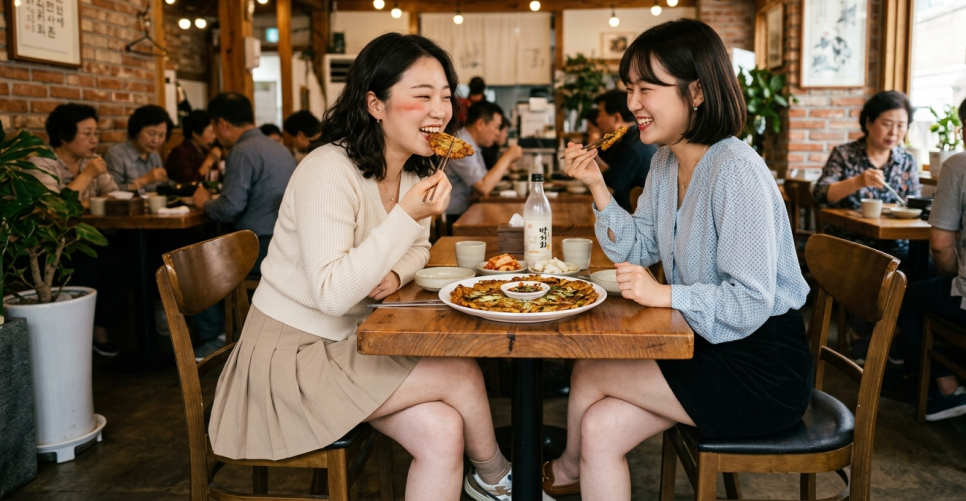
Also known as nokdujeon, this Korean mung bean pancake recipe focuses on the one thing that decides whether it turns out crisp and juicy or dense and dry.
Homemade mung bean pancakes often come out dry, dense, or stiff within minutes of leaving the pan. The cause is usually one of two things: too little water in the batter, or too little oil in the pan.
This guide covers the water ratio, how to grind the batter, how to prepare the fillings, and how to pan-fry the pancakes so they stay tender inside. A troubleshooting table and storage tips come at the end.
The ratio to remember
Soaked mung beans : water = 1 : 0.75 by volume.
The original measurement is 2 cups soaked beans to 1½ cups water. Korean recipes typically use a 200 ml cup, so that’s about 300 ml of water. If you use a US cup (240 ml), keep the same 1 : 0.75 ratio and the batter will behave the same way. Measure the beans after soaking, not before.
Ingredients
- Hulled, split yellow mung beans, soaked (2 cups soaked)
- Ground pork (a mix of about 30% fat and 70% lean works well)
- Mung bean sprouts
- Aged (sour) kimchi
- Glutinous (sweet) rice flour, 2 tablespoons
- Water, about 1½ cups, added gradually
- Cooking oil and a few drops of toasted sesame oil, for frying
For the pork seasoning: 1 tablespoon soy sauce, 1 tablespoon minced garlic, ½ tablespoon ginger syrup (or mirin), a pinch of black pepper.
For the dipping sauce: soy sauce, vinegar, water, and sugar in a 2 : 1 : 1 : ½ ratio, with sliced onion and a hot green chili.
Look for beans labeled “peeled” or “hulled and split,” which are yellow. Beans with the green skin still on are nutritious, but they make a coarser pancake.
Step 1: Soak the beans
Soak in cold water for at least 4 hours, ideally up to 8. A bean is ready when you can crush it easily between your fingers. Under-soaked beans leave the batter gritty and the texture rough. In a warm kitchen, soak them in the refrigerator.
Step 2: Blend the batter in two stages
Don’t add all the water at once.
- Put the soaked beans in the blender with 1 cup of water and blend.
- Check the consistency. It should flow slowly off a spoon, not run like milk.
- Add the remaining ½ cup only if the batter still looks thick.
- Add the sweet rice flour and stir.
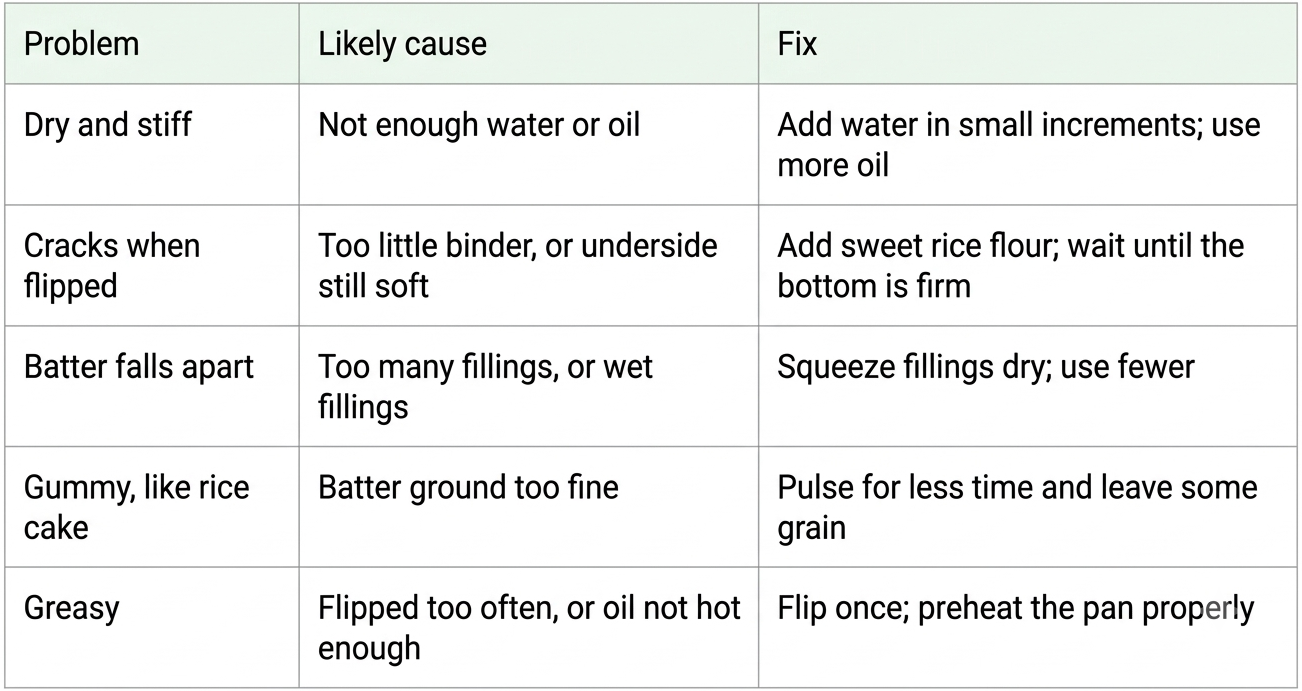
Stop blending while you can still see fine grains. A totally smooth batter turns sticky and chewy, like rice cake. A very coarse one falls apart in the pan. The sweet rice flour adds the stretch that mung beans lack, which keeps the pancake from tearing when you flip it.
Step 3: Prepare the fillings so they don’t water down the batter
Pork. Mix with the seasoning and let it sit while you prep the rest. Ginger helps cover any gamey smell.
Bean sprouts. Blanch in salted boiling water for 1 to 2 minutes, then rinse in cold water right away to keep them crunchy. Squeeze out the water, then toss with a little salt and sesame oil. Seasoned sprouts blend into the batter instead of tasting separate.
Kimchi. Squeeze out the brine and chop finely. Too much liquid thins the batter. If the kimchi is very sour, a small pinch of sugar softens it.
How much of each filling to use is up to you. Start with modest amounts and add more until the batter just coats everything. Too many fillings leave the batter unable to hold them together.
Step 4: Pan-fry more like shallow-frying
This step matters as much as the batter.
- Use plenty of oil. Skimping on oil is a common cause of dry pancakes. Add a few drops of toasted sesame oil to the cooking oil for flavor.
- Test the heat. Drop in a little batter. If it sizzles right away, the pan is ready.
- Keep them thick. Aim for 1 to 1.5 cm (about ½ inch). Don’t press the batter flat with a spoon. A thicker pancake gets a crisp edge and stays juicy inside.
- Flip once. Wait until the underside is firm and golden. Repeated flipping lets the pancake soak up more oil and makes it greasy.
- Cook it through. Thick pancakes with pork can brown outside before the inside is done, so use medium or medium-low heat. The USDA recommends cooking ground pork to an internal temperature of 160°F (71°C).
Troubleshooting
Serving and storing
The soy-vinegar sauce cuts through the richness of the fried pancake. If you can’t find Korean green chilies, a jalapeño or other hot green chili works.
To store leftovers, cool them completely, layer them with parchment paper in an airtight container, and freeze. Reheat in an air fryer at 180°C (350°F) for about 5 minutes to bring the edges back.
FAQ
Can I use whole mung beans with the skins on?
You can, but the pancake will have a rougher texture. Hulled yellow beans give a more tender result.
Why add sweet rice flour?
It adds chew and helps hold the pancake together, since mung bean batter alone has little stretch.
Why is my pancake dry even with the right water ratio?
Check your oil. Pan-frying with too little oil dries the surface and the inside. Also check that your fillings were squeezed dry.
Is it okay to skip the pork?
The pork adds fat and flavor, and the recipe above is built around it. If you skip it, expect a lighter, less rich pancake and consider a little extra oil.
Source to verify before publishing: USDA FSIS Safe Minimum Internal Temperature Chart.


