Keytruda (pembrolizumab) helps the immune system attack cancer, but it can cause serious side effects. Here's how it works, what to watch for, and a real recovery story.

Keytruda, known generically as pembrolizumab, doesn't attack cancer cells directly. Instead, it releases the brakes on the immune system so the body's own T cells can find and destroy tumors on their own. That mechanism is exactly why Keytruda can be so effective — and why it can also cause side effects that look nothing like traditional chemotherapy.
This guide breaks down how Keytruda works, what kind of results patients typically see, the side effects to watch for, and a firsthand account of one family's experience with a difficult start that turned into a strong response.
What Is Keytruda and How Does It Work?
Keytruda belongs to a class of drugs called immune checkpoint inhibitors. It was approved by the FDA in 2014 and is now used across dozens of cancer types, including lung, kidney, bladder, melanoma, and several urothelial cancers.
Under normal conditions, T cells are the immune system's main tool for hunting down abnormal cells. Many tumors survive by hijacking a natural "off switch" on T cells called PD-1. When a protein on the tumor's surface (PD-L1) binds to PD-1, it tells the T cell to stand down — effectively letting the cancer hide in plain sight.
Pembrolizumab is a lab-made antibody that blocks this PD-1/PD-L1 interaction. Once that signal is blocked, T cells are freed up to recognize and attack the tumor again. It's worth understanding this distinction: Keytruda isn't a general immune booster. It specifically interrupts one of the ways cancer evades detection, which is why doctors describe it as "taking the brakes off" the immune response rather than "revving up" the immune system as a whole.

What Results Can Patients Actually Expect?
Response to Keytruda varies significantly by cancer type, stage, and individual biology. Some patients see tumors shrink substantially; others experience disease stabilization without dramatic shrinkage; and, as with any cancer treatment, some patients don't respond at all.
Because of this variability, oncologists don't rely on symptoms alone to judge whether treatment is working. Response is typically tracked through a combination of:
- Imaging (CT or MRI scans) to measure tumor size and spread
- Blood tests to monitor organ function and overall health markers
- The patient's day-to-day condition, including pain levels and energy
Common Side Effects of Keytruda
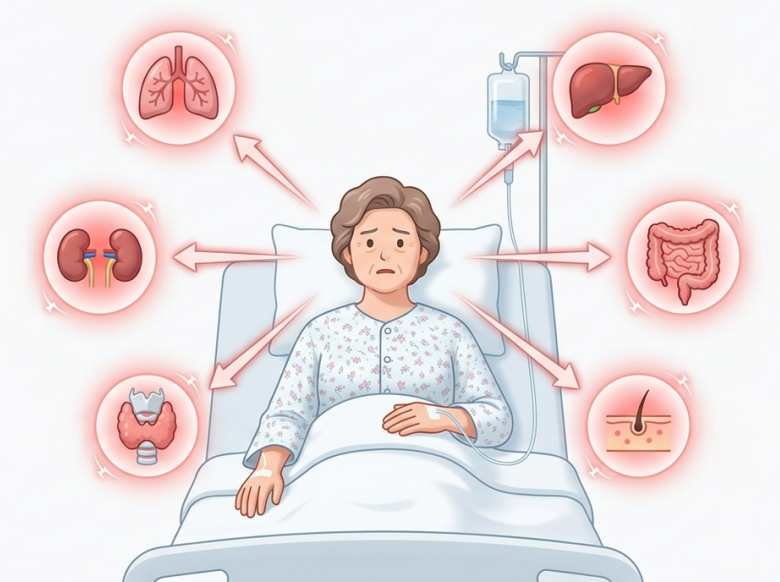
Because Keytruda works by amplifying immune activity, that same activity can spill over onto healthy tissue. These are known as immune-related adverse events (irAEs), and they're structurally different from the side effects of standard chemotherapy — they stem from inflammation, not from cell death caused by cytotoxic drugs.
| Organ / System | Possible Symptoms |
| Lungs | Cough, shortness of breath, immune-related pneumonitis |
| Liver | Elevated liver enzymes, hepatitis |
| Intestines | Diarrhea, abdominal pain, colitis |
| Skin | Rash, itching |
| Thyroid | Hypothyroidism or hyperthyroidism, fatigue |
| Kidneys | Reduced kidney function, nephritis |
| Whole body | Fever, severe fatigue |
Clinical trial data from melanoma patients treated with pembrolizumab give a sense of how common these reactions are: fatigue was reported in roughly 20% of patients, diarrhea in about 14%, rash in around 13%, hypothyroidism in about 8%, hyperthyroidism in around 3%, and hepatitis in under 2%. Not every patient experiences side effects, and severity varies widely even among those who do.
The Rare but Serious Risk: Cytokine Release Syndrome
Occasionally, an overactive immune response to Keytruda can trigger a systemic inflammatory reaction known as cytokine release syndrome (CRS) — sometimes referred to informally as a "cytokine storm." CRS happens when immune cells release an excess of signaling proteins called cytokines, particularly interleukin-6 (IL-6), causing inflammation throughout the body rather than in one organ.
CRS is more commonly associated with cellular therapies like CAR-T, and it remains rare with checkpoint inhibitors such as pembrolizumab. Still, case reports in medical literature describe it occurring after Keytruda treatment, sometimes presenting with confusion or altered mental status rather than obvious respiratory symptoms.
Warning signs to take seriously include:
- Sudden high fever
- Severe chills
- A drop in blood pressure
- Difficulty breathing
- Extreme weakness or confusion
- In severe cases, signs of multiple organs struggling at once
Any combination of high fever with breathing trouble or low blood pressure warrants urgent medical evaluation — this isn't something to wait out at home.
A Real Patient's Story: From Crisis to Recovery
The account below comes from a family member describing their mother's treatment for stage 4 ureteral (urothelial) cancer that had already spread to the kidney, lungs, and left shoulder at diagnosis.
Radiation First, Then a Difficult Start With Chemotherapy
Because the shoulder metastasis was causing significant discomfort, doctors began with 13 sessions of radiation therapy, which noticeably improved the shoulder pain. But with cancer present in multiple organs, systemic treatment was still necessary.
The first attempt was traditional chemotherapy. After a single session, she developed pneumonitis and her kidney function declined sharply. The side effects were severe enough that her care team changed course, moving her to pembrolizumab (Keytruda) instead.
A Frightening First Response to Keytruda
The switch to immunotherapy didn't bring immediate relief. After the very first Keytruda infusion, she developed pneumonitis again, her kidney function worsened further, and she began experiencing delirium — a combination her family describes as more severe than what she'd experienced with chemotherapy.
At the low point, her oncologist told the family that the next two to three days would be critical. The family began preparing for the possibility that she wouldn't recover, including looking into funeral arrangements. It was, by their account, one of the hardest periods of the entire experience.
She pulled through that crisis, and her care team continued the Keytruda treatment.
CT Scans After Three Cycles Told a Different Story
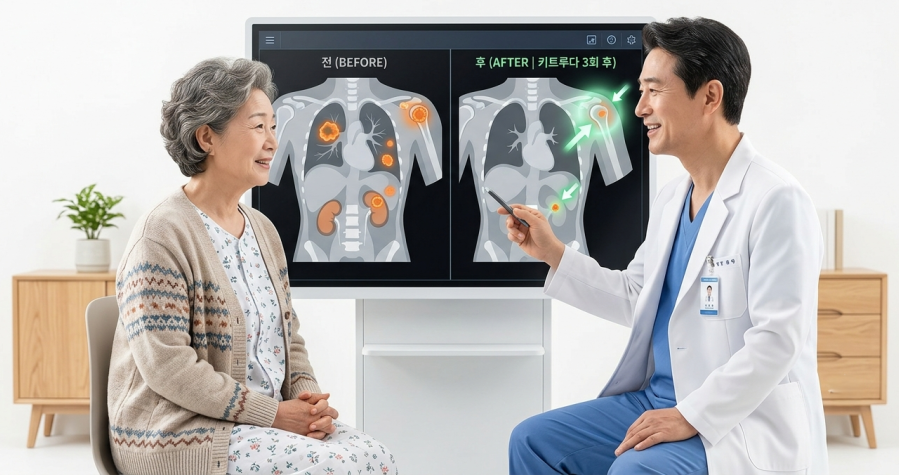
A follow-up CT scan after three cycles of Keytruda showed a dramatic shift. The lung metastases had improved to the point of being essentially undetectable on imaging. The kidney and shoulder lesions had shrunk to roughly one-third of their original size — about a two-thirds reduction in what was visible on the scan.
It's worth noting, as the family points out, that a CT scan doesn't literally count individual cancer cells. A more precise way to describe the result is that the visible lesion size on imaging dropped substantially, rather than saying a specific percentage of cancer cells disappeared.
Bloodwork and Daily Life Improved Too
Blood test results came back strong alongside the imaging improvement, and daily life became noticeably easier. Her need for opioid pain medication dropped sharply, to the point of being almost unnecessary, and her overall condition and comfort improved substantially. Her oncologist even noted that, given her current status, something as routine as dyeing her hair was now a reasonable option — a small detail, but one that reflected how far she'd come from the crisis weeks earlier.
Key Takeaway: A Rough Start Doesn't Predict the Outcome
The biggest lesson from this family's experience is that a difficult early response to Keytruda doesn't necessarily forecast how treatment will ultimately go. During the worst days, it was reasonable to fear that the cancer wasn't responding and that things were only getting worse.
The imaging results told a different story. To be clear, a severe side effect is not itself a sign that treatment is working — side effects and treatment efficacy are separate biological processes, and one doesn't reliably predict the other. But this case is a reminder that judging long-term outcomes from the hardest early days alone can be misleading. Ongoing monitoring — imaging, bloodwork, and clinical evaluation — is what actually tells the story over time.
Frequently Asked Questions
Is Keytruda a form of chemotherapy?
No. Chemotherapy kills rapidly dividing cells directly. Keytruda is an immunotherapy — it blocks a signal that lets cancer hide from the immune system, allowing the patient's own T cells to attack the tumor.
Are Keytruda's side effects the same as chemotherapy side effects?
Not typically. Chemotherapy side effects mostly stem from damage to fast-dividing healthy cells (like hair follicles or gut lining). Keytruda's side effects come from immune inflammation in organs such as the lungs, liver, gut, thyroid, or kidneys, and they can appear at any point during treatment, not just right after infusion.
Does a severe side effect mean Keytruda is working well?
Not necessarily. Side effects and anti-tumor response are driven by different biological processes. Some patients respond strongly with few side effects, and some experience side effects without a strong tumor response. Response should be judged through imaging and lab work, not symptom severity.
How is cytokine release syndrome different from typical irAEs?
Standard immune-related adverse events tend to target one organ system at a time — for example, the lungs or the thyroid. Cytokine release syndrome is a broader, whole-body inflammatory reaction and is considered rare with checkpoint inhibitors like Keytruda, though it has been documented in case reports.
Should I stop Keytruda if side effects appear?
That decision belongs to the treating oncology team. Depending on severity, doctors may pause treatment, add corticosteroids to calm the immune response, or in some cases discontinue the drug. Never adjust or stop an immunotherapy regimen without medical guidance.
Conclusion
Keytruda (pembrolizumab) works by removing one of cancer's key defenses against the immune system, which is why it can produce meaningful, sometimes dramatic, responses in patients with advanced disease. That same mechanism also explains why its side effects — pneumonitis, hepatitis, colitis, thyroid dysfunction, and in rare cases cytokine release syndrome — look so different from those of conventional chemotherapy.
This family's experience illustrates both sides of that reality: a frightening immune reaction early in treatment, followed by a strong and measurable response on later scans. One patient's outcome can't be generalized to every case, but it underscores a broader point borne out by clinical practice — evaluating a treatment's effectiveness requires looking at imaging, bloodwork, and overall clinical status together, not judging by the hardest days alone.
This article shares general health information alongside one family's personal treatment experience for informational purposes only. It is not a substitute for professional medical advice. Please consult your oncology care team for diagnosis and treatment decisions specific to your situation.


